

 English
 Español
 عربى
عربى русский
Your hand brushes the metal housing of your car's LED headlight after an hour of night driving. The surface feels warm. A week later, your fog light LED starts flickering on and off. If you have ever asked yourself whether LED light bulbs get hot, the simple answer is yes. But the useful question for a driver or a retrofit buyer is how hot they actually become, and what that heat means for the bulb's lifespan and your safety.
The Short Answer: LED Bulbs Get Hot, But Halogen Gets Hotter
LED bulbs are not cold to the touch. The LED chip inside converts about 80 to 90 percent of the electricity it receives into light. The remaining 10 to 20 percent becomes heat. In comparison, a halogen bulb converts only about 10 to 20 percent of its energy into light and releases the rest as heat.
As a result, the heat sink of a quality LED headlight bulb running for 30 minutes can reach 60 to 80 degrees Celsius. A halogen bulb in the same fixture can reach 200 to 300 degrees Celsius on its glass surface. So yes, LED bulbs get hot, but they get hot in a different place, for a different reason, and at a much lower temperature than the bulbs they replace.
Where Does the Heat Come From Inside an LED Headlight Bulb?
The LED chip and junction temperature
Light emitting diodes create light when electrons cross between semiconductor layers. This process is efficient but not perfect. Some energy is lost as heat at the junction, the point where the semiconductor meets its base. This is called junction temperature, often abbreviated as Tj.
Automotive LED headlight bulbs are engineered to operate with junction temperatures between 80 and 150 degrees Celsius. If the junction climbs above the rating, the semiconductor degrades, and light output drops. A well-designed bulb keeps this temperature stable through a deliberate thermal path.
The driver and electrical components
Inside every LED headlight bulb is a driver. It converts the car's DC voltage into the constant current the LED needs. Even a well-designed driver wastes 5 to 10 percent of its input as heat. In a 35W bulb, that is 3 to 4W of thermal load that must be carried away by the heat sink. If the driver is not properly insulated, its heat can leak back into the LED chip, creating a feedback loop.
Heat sink and thermal path
The heat sink is the metal body at the back of the bulb. It is made from aluminum or copper, both selected for their high thermal conductivity. The goal is to move heat from the junction to the cooling fins, where airflow carries it into the engine bay or the surrounding air. Without an effective heat sink, the bulb's life span drops quickly.
How Hot Do LED Headlight Bulbs Actually Get?
The answer depends on power rating, the design of the heat sink, and how the bulb is installed. The values below are typical for quality automotive LED and halogen headlight bulbs.
| Measurement | LED Headlight Bulb | Halogen Headlight Bulb |
|---|---|---|
| Glass or lens surface | 40-60°C | 200-300°C |
| Heat sink | 60-80°C | Not applicable |
| LED junction | 80-150°C | Not applicable |
| Typical power | 25-55W | 55-65W |
| Lumens per watt | 90-120 lm/W | 15-25 lm/W |
The heat sink of a typical 35W LED headlight bulb runs at 60 to 80 degrees Celsius during normal operation. That is warm enough to be uncomfortable if you touch it, but far below the 200 to 300 degrees Celsius of a halogen bulb. For reference, water boils at 100 degrees Celsius.
Two factors can raise these numbers significantly. First, a completely enclosed headlight housing traps heat. The bulb's heat sink needs air movement to transfer heat to the surroundings. When the air around the bulb is already warm, the thermal gradient shrinks, and heat builds up. Second, an LED bulb that is rated far above the fixture's original wattage can overwhelm the thermal path. A 55W bulb installed in a housing designed for 35W may run 10 to 20 degrees Celsius hotter at the heat sink, even if the same bulb would run normally in a different fixture.
Why Heat Is the Real Enemy of an LED Bulb
LED bulbs rarely fail from a sudden electrical fault. They fail from heat. When the junction temperature exceeds the manufacturer's specification, three things happen to the bulb.
- Light output drops. A hotter LED produces fewer lumens per watt. This effect is known as thermal droop, and it becomes visible as the bulb warms up.
- Lifespan shortens. Many automotive LEDs are rated for 50,000 hours, but that rating assumes the junction stays within its rated temperature. Every 10 degrees Celsius increase above the rated junction temperature can cut LED lifespan in half.
- Color shifts. In extreme cases, the phosphor coating on the LED degrades, causing a yellowish or greenish tint and a mismatch between the left and right headlights.
Every 10°C increase above the rated junction temperature can cut LED lifespan in half.
Not all heat damage happens instantly. Thermal stress is cumulative. A bulb that runs at 95 degrees Celsius for 20,000 hours may still be brighter than a bulb that runs at 120 degrees Celsius for 10,000 hours. Five factors drive LED bulbs into overheating territory:
Enclosed fixtures High ambient temp Overvoltage Poor heat sink Incorrect installation
How Quality Automotive LED Bulbs Manage Heat
Understanding the enemy is only half the battle. A well-designed LED headlight bulb fights heat with a clear thermal path.
The material matters: 6063 aluminum vs copper
Aviation-grade 6063 aluminum is the most common heat sink material in automotive LED bulbs. Its thermal conductivity is around 200 W/m·K, which is high enough to move heat from the LED chip to the fins quickly. For example, an aviation 6063 aluminum profile LED headlight bulb uses a fin structure that spreads heat across a larger surface area, keeping the junction stable even during long drives.
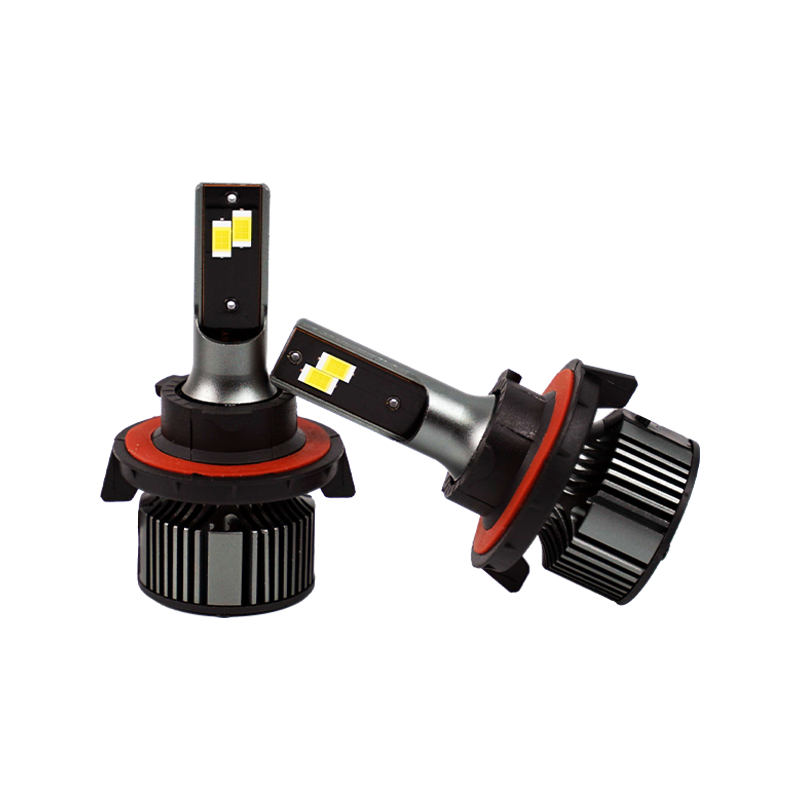 A8 JC-H13 Aviation 6063 aluminum profile LED Headlight BulbNew model designation JC-H13 Suitable vehicle type Be common OE Code H13 Case color Silver Shell material Aviation 6063 aluminum profile Service life 50000h Waterproof...View Product →
For higher-power applications, copper conducts heat about twice as fast as aluminum. A 100W copper heat sink LED headlight bulb uses that advantage to keep a high-power LED within its thermal budget in a compact housing, where the fins have less room to breathe.
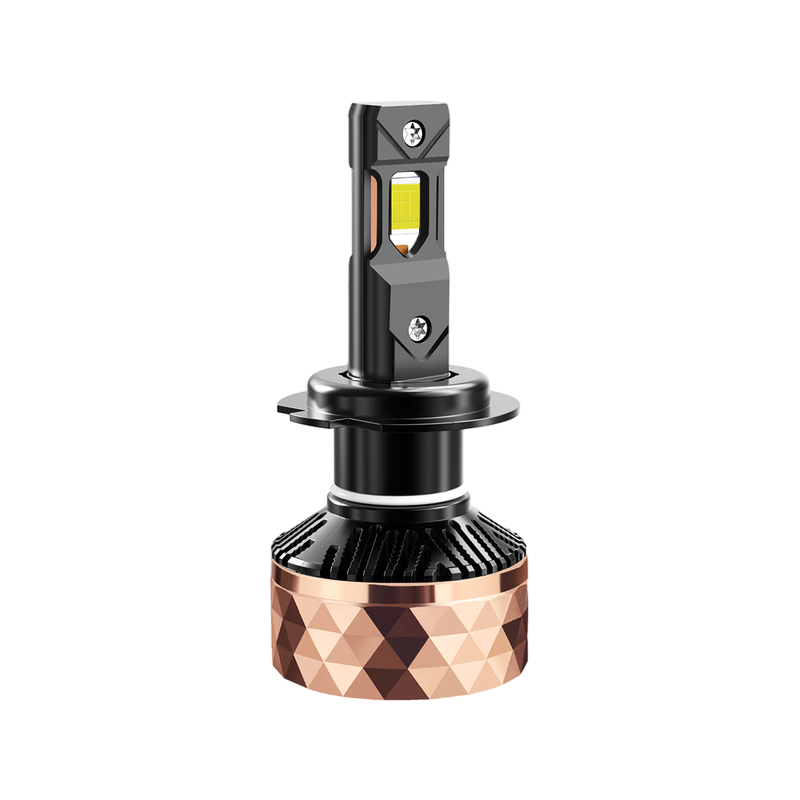 V80S 100W Copper LED Headlight BulbCurrent model designation V80S Suitable vehicle type Be common OE Code H1、H3、H4、H7、H11、9005、9006、9012 Case color Coppery Shell material Aviation 6063 aluminum profile ...View Product →
Waterproofing as part of thermal design
IP68 waterproofing is often understood as moisture protection only. But it also plays a role in thermal stability. A sealed housing prevents water vapor from entering the driver area. Moisture accelerates corrosion on the cooling fins, which reduces their ability to release heat. The waterproof IP68 LED headlight bulb keeps its heat sink sealed, so it maintains consistent thermal performance in rain, fog, and dusty conditions.
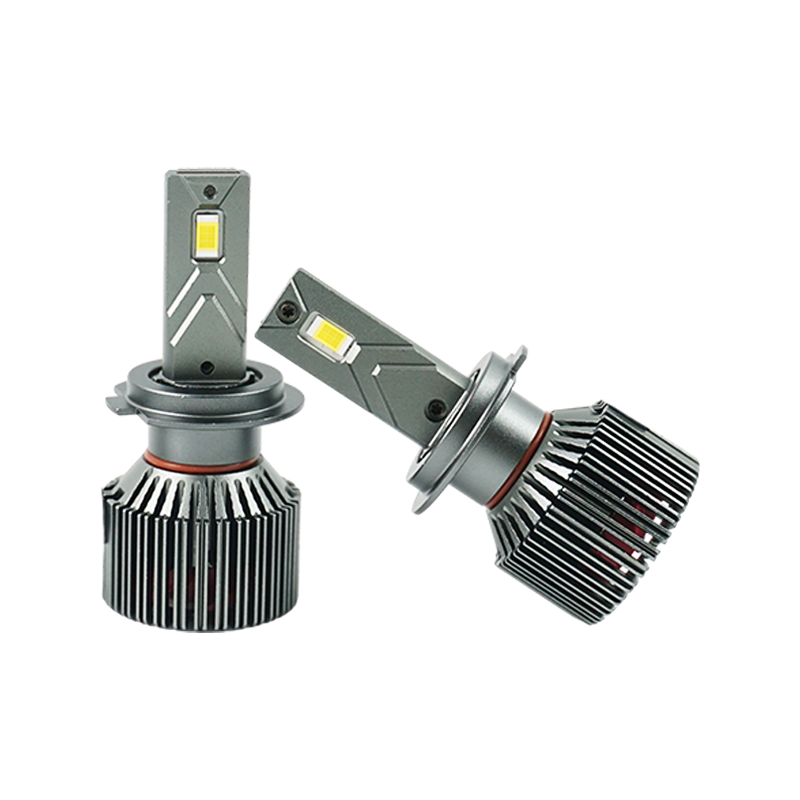 E5 JC-H7 waterproof IP68 LED Headlight BulbNew model designation JC-H7 Suitable vehicle type Be common OE Code H7 Case color Silver Shell material Aviation 6063 aluminum profile Service life 50000h Waterproof c...View Product →
Why radiators are not optional
Some plug-and-play LED bulbs look simple, but they still need a real radiator or heat sink. Without a proper thermal path, the heat has nowhere to go, and the bulb degrades quickly. This is why LED headlight bulbs have radiators built into their design. The fins, the material, and the airflow around them determine how long the bulb will actually last.
What a Retrofit Buyer Should Consider
When you choose an LED bulb for your vehicle, heat management should be a top-three selection criterion. A practical way to avoid overheating is to look at how a bulb is built, not only at its claimed lumens. The best automotive LED bulbs share several characteristics: a thin, dense fin array that increases surface area, a base plate that seats firmly in the housing, and a driver circuit that runs at low temperature. These features work together to keep the LED junction close to its rated temperature.
- Check the heat sink material and fin design. Look for 6063 aluminum or copper, not plastic.
- Match the wattage to the fixture. A 55W bulb in a completely sealed headlight housing may overheat.
- Confirm the waterproof rating. IP68 is a solid baseline for automotive use.
- Compare rated lifespan and junction temperature. A 50,000-hour rating means little if the heat sink cannot keep the junction cool.
- Check the beam pattern. A bulb that keeps its temperature stable in the fixture is more likely to preserve the original beam pattern.
For a technical explanation of why material choice changes the outcome, read why 6063 aluminum profile LED bulbs are better at heat dissipation.
Frequently Asked Questions About LED Bulb Heat
Q1: Is it normal for an LED headlight bulb to be hot to the touch?
After 30 minutes of operation, the heat sink of a typical 35W automotive LED bulb can reach 60 to 80 degrees Celsius. It is normal for the metal body to feel warm. It is not normal for the lens or housing to feel dangerously hot. If you cannot hold the base for more than a second, the installation or the thermal design may be wrong.
Q2: Can an LED bulb start a fire?
The risk is very low compared with halogen bulbs. LED bulbs run at 60 to 100 degrees Celsius at the base, while halogen runs at 200 to 300 degrees Celsius. However, a failed driver, a short circuit, or a wrong relay harness can generate unwanted heat. Choose quality bulbs and install them correctly.
Q3: Why does my LED bulb flicker after using it for a while?
Flicker is often a sign of thermal stress. When the driver overheats, it reduces current to protect the circuit, then increases it again, causing a visible flicker. An oversized power rating or an enclosed housing with no airflow both contribute to this condition.
Q4: Are LED bulbs better than halogen in hot environments?
LEDs produce less total heat and more light per watt. In an engine bay that runs at 90 to 110 degrees Celsius, LED headlight bulbs still convert a larger portion of their input into light. Halogen bulbs generate more heat and fail more quickly at high temperatures.
Q5: How can I reduce heat buildup in my LED headlight fixture?
Make sure airflow is not blocked. Do not install a dust cover that presses directly onto the heat sink. Choose bulbs rated for enclosed housings, and check that the wire connector does not cover the cooling fins.
LED light bulbs do get hot. That is simply the physics of converting electricity into light. But a well-designed LED headlight bulb runs at 60 to 80 degrees Celsius on the heat sink, while a halogen bulb burns at 200 to 300 degrees Celsius. The heat sink material, the fin design, and the waterproofing determine whether your LED bulb will deliver 50,000 hours or fail early. When you upgrade your vehicle's lighting, the right question is not whether LED bulbs get hot, but whether the bulb you choose is built to manage that heat.