

 English
 Español
 عربى
عربى русский
The Real Cost of Sticking With Outdated Halogen Bulbs
Halogen filaments have barely changed in decades, yet the roads drivers travel at night have grown busier, faster, and less forgiving of poor visibility. A worn halogen bulb loses a measurable share of its output long before it actually fails, which means many drivers are operating with dim, yellow-tinted beams without realizing how much contrast and reaction time they have already lost.
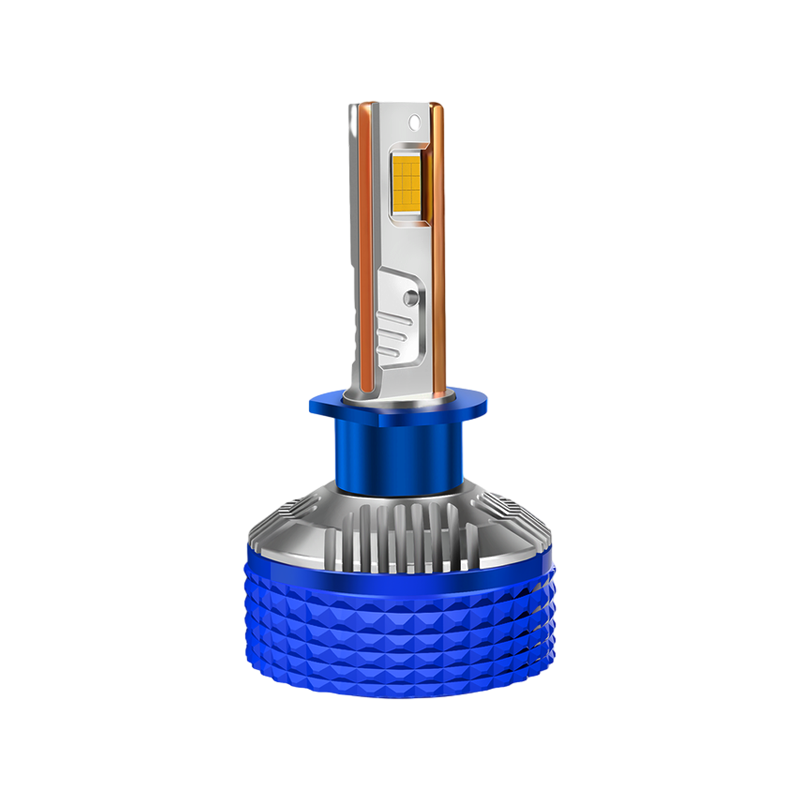
This is why so many owners are switching to a led headlight bulb as a direct, plug-style upgrade. Modern chip-based LEDs produce a whiter, more concentrated beam that reveals road markings, signage, and roadside hazards at a greater distance, without drawing significantly more current from the vehicle's electrical system.
The sections below break down the technology, the measurable performance differences, and the practical steps involved in moving from halogen or HID to a properly matched LED setup.
How CSP LED Chip Technology Changed Beam Output
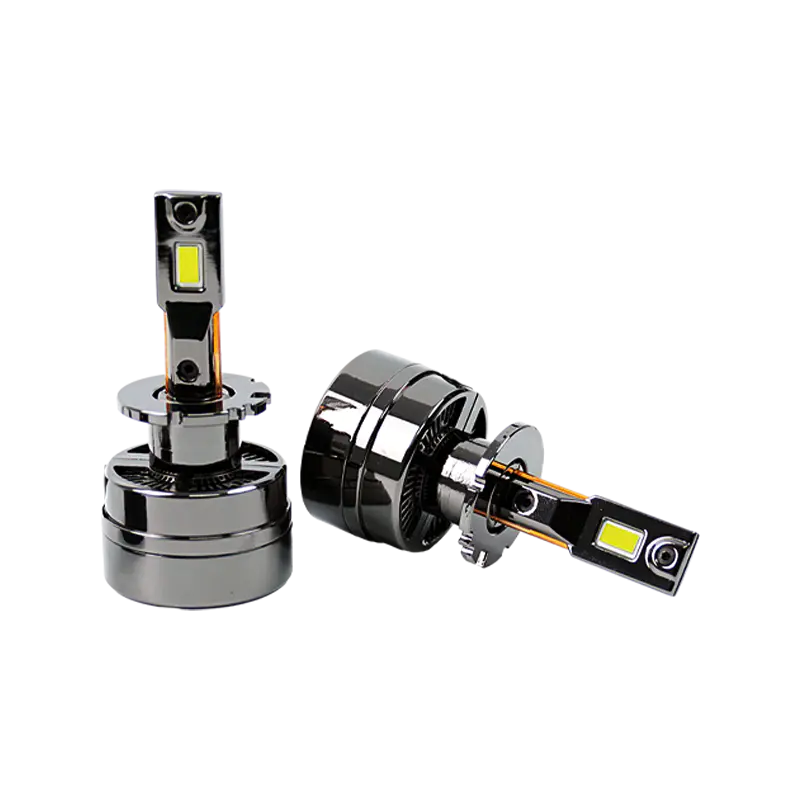
Early automotive LED retrofits struggled with a single problem: the light source was too small and too directional to fill a reflector or projector housing the way a halogen filament does. Chip Scale Package, or CSP, LED technology solved much of this by mounting bare semiconductor dies directly onto a compact substrate, positioning multiple emission points close together to approximate the shape and spread of a halogen filament.
Because CSP chips generate light from a wider surface area than earlier single-diode designs, the resulting beam fills the reflector bowl more evenly. This reduces the dark patches and hot spots that plagued first-generation LED retrofits, and it allows the beam cutoff line to stay sharp rather than scattering light upward into oncoming traffic.
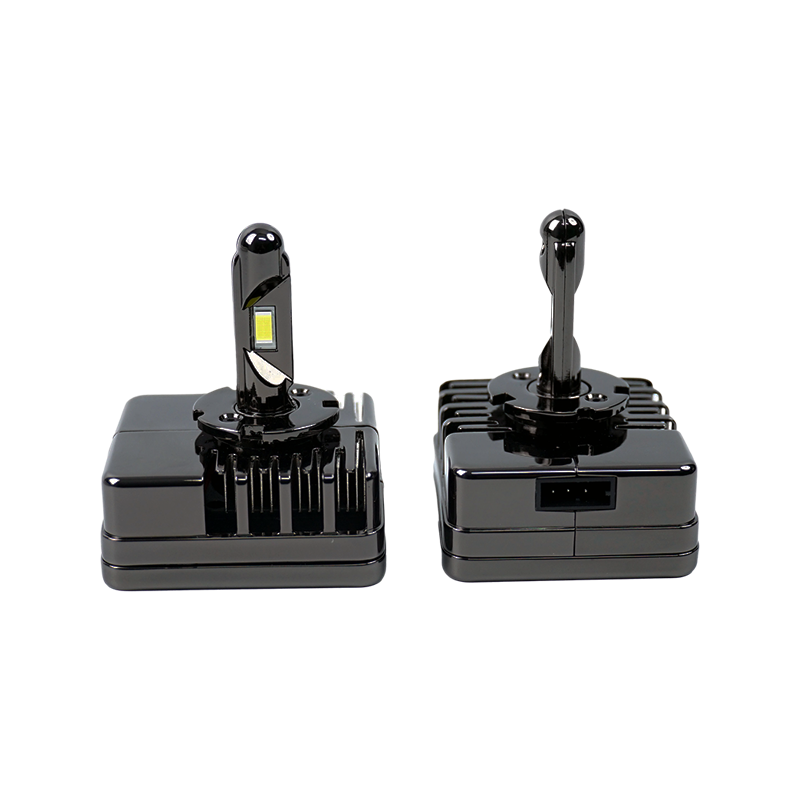
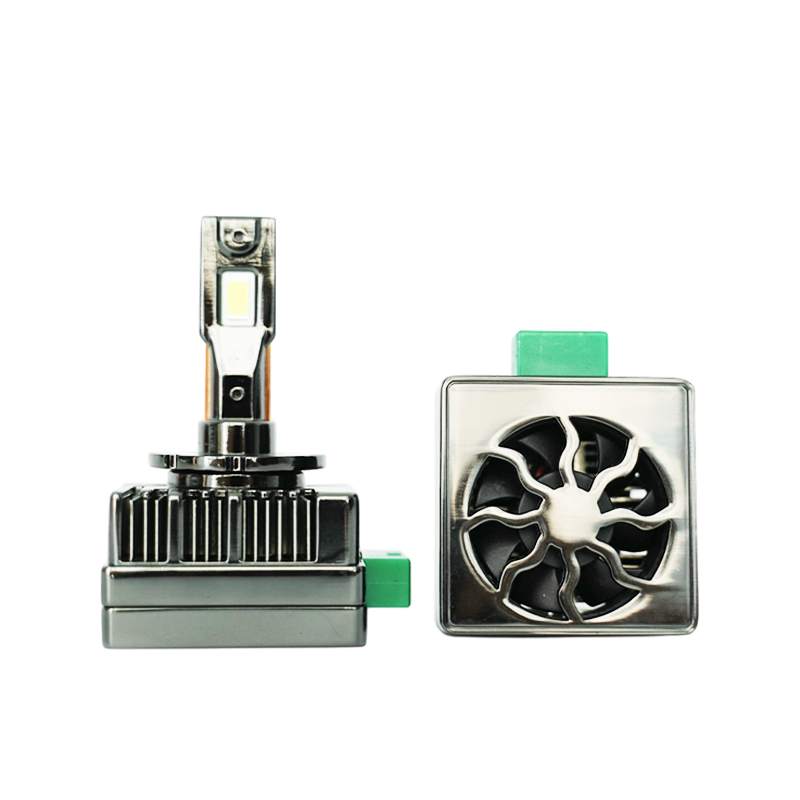
Heat management sits right beside chip design in importance. Every lumen a CSP chip produces also generates heat that has to leave the bulb quickly, which is why current designs pair the chip array with an aluminum body, a copper heat pipe, or an actively cooled fan sleeve. A chip that runs cooler holds its lumen output longer and resists the color shift toward blue or purple that under-cooled diodes often develop after extended use.
Brightness Comparison Across Bulb Types
Raw lumen figures only tell part of the story, but they remain the fastest way to compare how much usable light each bulb type puts on the road. The chart below reflects typical output ranges reported for standard replacement bulbs across the three most common lighting types.
Lumen Retention and Lifespan Over Time
A bulb that starts bright but fades quickly can be more dangerous than one that starts moderately bright and holds steady, since drivers tend to trust a beam that has not visibly changed. The line chart below approximates how output typically holds up over thousands of hours of use for halogen versus CSP LED sources.
Beam Pattern Optimization and Why Focal Point Matters
Brightness without focus can actually reduce visibility rather than improve it. If the LED chip array sits even a few millimeters off the position the reflector or projector was designed around, the beam cutoff blurs, glare increases for oncoming drivers, and forward throw distance shrinks even though total lumen output goes up.
Quality LED replacements are built around the same reference point halogen filaments use, sometimes called the filament centerline, so the chip array occupies the same optical position the housing was engineered for. Some kits also include adjustable collars that let installers rotate the chip orientation until the cutoff line reads sharp and level on a flat wall or garage door, which is the simplest field test for beam alignment.
- Confirm the chip orientation matches the bulb's factory alignment tab before final installation
- Test the beam pattern against a wall from roughly five meters away in a dark space
- Check that the horizontal cutoff line stays flat rather than tilting to one side
- Avoid bulbs with oversized heat sinks that push the chip forward or backward from the correct focal point
Error-Free Decoders and CANbus Compatibility Explained
Many vehicles built in the last fifteen years monitor bulb resistance to detect burned-out filaments and warn the driver. Because an LED draws current differently than a halogen filament, swapping bulbs without addressing this monitoring system can trigger a dashboard bulb-out alert or, on some platforms, cause the headlight to flicker at idle.
An error-free decoder, sometimes built into the driver unit and sometimes added as a separate inline module, simulates the electrical load pattern the vehicle computer expects from a halogen filament. This satisfies the monitoring circuit without requiring any change to the vehicle's wiring or software, and it is one of the most important specifications to confirm before buying a replacement bulb for a newer vehicle.
Vehicles that already flicker, strobe, or display an error message after a bulb swap almost always need a decoder-equipped bulb or an added load resistor rather than a different brightness level.
Choosing the Right Color Temperature for Your Vehicle
Color temperature affects how the eye perceives contrast far more than most drivers expect. A beam that reads as pure white can actually reduce visibility in rain or fog compared with a slightly warmer tone, because blue-heavy light scatters more readily off airborne moisture and reflects back toward the driver.
The 5000K to 6500K range remains the most common choice because it balances a clean white tone with enough warmth to maintain contrast in wet or hazy conditions, while 8000K and above trades practical visibility for a cosmetic blue tint.
Halogen vs HID vs LED: Full Performance Comparison
No single bulb type wins on every measure, which is why the comparison is best viewed across several categories at once rather than by brightness alone.
LED pulls ahead on brightness, lifespan, and efficiency, HID holds a middle position across most categories, and halogen remains competitive only on upfront cost and installation simplicity, since it requires no decoder or heat sink orientation to consider.
What's Inside a Quality LED Light Conversion Kit
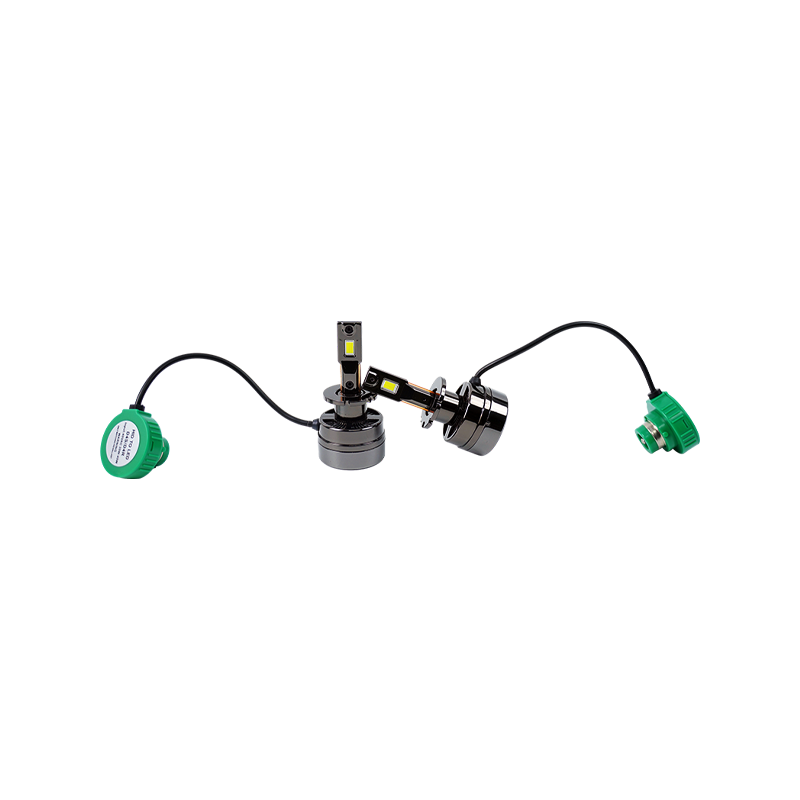
Buying a bare bulb is only part of the equation. A complete led light conversion kit typically bundles several components that work together to deliver stable output over years of use rather than months.
| Component | Function | Why It Matters |
| CSP chip array bulb | Converts electrical current into directional light | Determines raw brightness and beam shape |
| Built-in or external driver | Regulates voltage and current to the chip | Protects the chip from voltage spikes |
| Aluminum heat sink | Draws heat away from the chip surface | Extends operational lifespan |
| Cooling fan or copper braid | Actively or passively manages heat | Reduces failure rate in hot climates |
| CANbus decoder | Simulates halogen resistance for the vehicle computer | Prevents dashboard error codes |
| Sealed connector housing | Protects the electrical connection | Guards against moisture intrusion |
Step-by-Step Installation Overview
Most conversion kits are designed for a direct swap into the existing halogen socket, and the general sequence below applies to the majority of reflector and projector-style housings.
How to Choose the Best LED Headlight for Car Use
The right specification depends heavily on how and where a vehicle is driven, since a bulb tuned for open highway distance is not always the best fit for dense city traffic.
| Use Case | Lumen Range | Color Temp | Priority Feature |
| Daily mixed-condition commuting | 4500 to 6000 lm | 5000K to 6000K | Balanced brightness and glare control |
| Frequent rural or night driving | 6000 to 8000 lm | 5000K to 5500K | Maximum forward throw distance |
| Dense urban stop-and-go traffic | 4000 to 5000 lm | 6000K to 6500K | Crisp visibility among heavy lighting |
| Older vehicles with sensitive electronics | 4500 to 5500 lm | 5000K | Built-in decoder compatibility |
Anyone shopping for a reliable led headlight for car use should treat the decoder specification and heat sink design as equally important as the lumen number printed on the box, since a bulb that overheats or trips an error code delivers no real benefit no matter how bright its rated output looks on paper.
Frequently Asked Questions
Q1: What is the difference between an LED headlight bulb and a full LED light conversion kit?
A single bulb typically includes the chip array and its immediate driver, while a full kit adds items such as a CANbus decoder, mounting adapters, and sometimes a relay harness so the entire system matches the vehicle's electrical behavior rather than just producing light.
Q2: Will an LED headlamp conversion kit trigger a dashboard warning light?
It can, if the bulb lacks a decoder or load resistor that mimics halogen resistance. Vehicles with bulb-monitoring systems generally need a decoder-equipped bulb to avoid an error message or flicker.
Q3: How long does a CSP LED headlight bulb typically last?
Well-cooled CSP bulbs commonly maintain strong output well beyond 20,000 hours of use, though actual lifespan depends heavily on heat sink quality and how well the bulb is ventilated inside the housing.
Q4: Can I install an LED headlight for car use without professional help?
Most direct-fit kits are designed for straightforward home installation using basic hand tools, though beam alignment should still be checked against a flat surface or by a service center afterward.
Q5: Does color temperature affect how well the beam pattern performs in fog or rain?
Yes. Warmer tones in the 5000K range tend to scatter less in airborne moisture than very blue tones above 7000K, which can improve visibility during poor weather even at similar lumen output.