

 English
 Español
 عربى
عربى русский
Most drivers assume LED headlights are virtually indestructible. They run cooler than halogens, consume less power, and are rated for tens of thousands of hours. Yet moisture — from rain, condensation, road spray, and humidity — remains one of the most consistent causes of premature LED headlight failure in everyday vehicles. Understanding exactly how water interacts with LED optics, drivers, and thermal systems gives you a clear roadmap for preventing damage before it starts.
The Science Behind Moisture Damage in LED Headlights
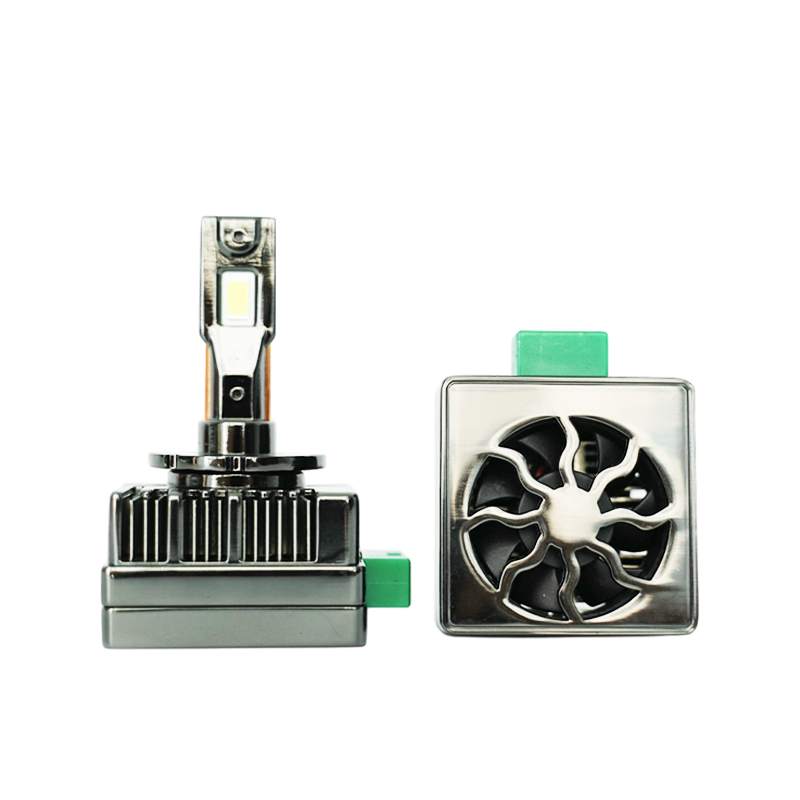
LED headlights are complex assemblies, not simple bulbs. Each unit contains a light-emitting diode array, a driver circuit, a heat sink, and a sealed optical lens. Moisture attacks each of these components differently, and often simultaneously.
How Water Enters a Headlight Housing
Factory headlight housings are sealed, but seals degrade over time. Common entry points include:
- Cracked or aged rubber gaskets around the lens and rear cap
- Poorly routed wiring grommets that allow capillary water migration
- Micro-fractures in the polycarbonate lens caused by UV exposure
- Aftermarket retrofit installations that break the original factory seal
- Pressure differentials during temperature cycling that draw humid air inward
Once moisture is inside, it does not simply evaporate. Enclosed headlight housings trap humid air, and repeated heating and cooling cycles cause condensation to form on internal surfaces.
The Three Phases of Moisture Damage
LED Bulb Thermal Management and Why Moisture Makes It Worse
Heat is the primary enemy of LED longevity — and moisture dramatically amplifies thermal stress. LED chips operate efficiently only within a defined junction temperature range, typically below 150 degrees Celsius at the chip itself. The driver circuitry has even stricter thermal limits, often topping out around 85 to 105 degrees Celsius.
How Thermal Management Works in LED Headlights
LED headlight assemblies use one or more of the following cooling strategies:
- Passive aluminum heat sinks that conduct heat away from the chip base
- Built-in cooling fans (common in high-wattage retrofit bulbs) that move air across fins
- Copper heat pipes that transfer thermal energy through phase-change fluid
- Thermal interface materials (TIMs) that bond the LED board to the sink with minimal resistance
How Moisture Disrupts Thermal Pathways
Water is a surprisingly poor thermal conductor in thin film form, but it corrodes the metals that carry heat efficiently. When moisture infiltrates the gap between an LED board and its heat sink, it forms a barrier layer that increases thermal resistance. Studies on automotive-grade LED modules show that even a thin oxidation layer on an aluminum heat sink can raise junction temperatures by 12 to 18 degrees Celsius — enough to cut rated lifespan by 20 to 35 percent based on the Arrhenius thermal degradation model used in semiconductor testing.
Cooling fans present an additional risk point. Fan bearings are sealed, but prolonged exposure to salt-laden spray accelerates bearing wear. A fan running at reduced RPM due to corrosion can increase junction temperature enough to trigger thermal protection shutdowns, causing the headlight to flicker or turn off during heavy rain — exactly when full illumination is most critical.
A headlight rated for 50,000 hours under controlled lab conditions may deliver as few as 20,000 to 30,000 real-world hours in a vehicle operating in humid, rainy climates — unless moisture ingress is actively managed.
Water Resistance Ratings Explained: What IP Codes Actually Mean for Headlights
The Ingress Protection (IP) rating system defines how well an electrical enclosure resists solid particles and liquids. For automotive LED headlights, the second digit of the IP code is the critical number.
It is important to note that IP ratings test completed assemblies under laboratory conditions. A waterproof led headlight bulb with an IP67 rating may still admit moisture if the housing gasket has aged or the installation was not properly sealed. The rating reflects the bulb's own enclosure, not the vehicle housing it sits in.
The Hidden Problem: Pressure Cycling and IP Rating Degradation
Automotive headlights experience dozens of thermal cycles per week. Each time the LED heats up, internal air pressure rises; when it cools, pressure drops and draws ambient air inward through any available gap. Over 12 to 18 months of operation, this repeated pressure cycling can compromise seals that initially performed at IP67 standards, effectively reducing real-world protection to IPX4 levels without any visible external damage.
Headlight Corrosion Prevention: The Electrochemical Reality
Rain is not pure water. Road spray contains dissolved salts, road treatment chemicals, particulate matter, and trace acids from atmospheric pollution. This conductive solution is far more damaging than distilled water because it enables electrochemical corrosion at much lower voltages.
Where Corrosion Strikes First
In order of vulnerability, the components most susceptible to moisture-driven corrosion in LED headlights are:
- Electrical connectors and pin contacts — oxidation increases contact resistance, causing voltage drop and flickering
- PCB (printed circuit board) traces — copper tracks corrode, eventually opening circuit paths
- Aluminum heat sink surfaces — white oxidation (aluminum oxide) forms an insulating layer that traps heat
- Driver capacitors and MOSFETs — humidity accelerates electrolytic capacitor degradation, reducing driver lifespan by 30 to 60 percent in extreme cases
- LED phosphor coating — moisture degrades the phosphor layer that converts blue light to white, causing color shift toward blue-green over time
Salt Spray: The Accelerated Aging Test
Industrial salt spray testing (standardized in protocols like ASTM B117) exposes components to a 5 percent sodium chloride mist at 35 degrees Celsius for periods of 96 to 500 hours. Quality automotive LED components should demonstrate no structural corrosion after 96 hours and no functional failure after 240 hours of salt spray exposure. Components that fail this test at shorter intervals will show early degradation in coastal and northern climates where road salt is heavily used.
Water Resistance in the LED Driver: The Component Most Drivers Overlook
The LED driver — the electronic module that regulates current to the LED chip — is the most electrically complex part of an LED headlight system, and it is often the first to fail when moisture is present. Unlike the LED chip itself, which is a simple solid-state emitter, the driver contains dozens of discrete components: capacitors, inductors, MOSFETs, microcontrollers, and resistors, all operating on a small PCB.
Why Drivers Are Moisture-Sensitive
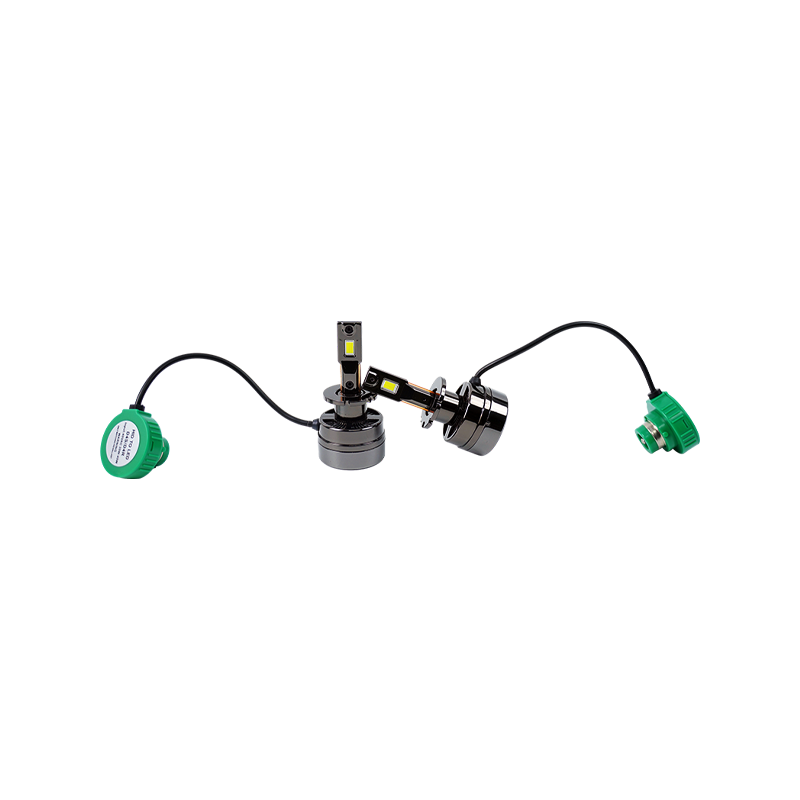
Drivers are typically housed in a separate module that connects to the headlight assembly via a wiring harness. This external position makes them more exposed to road spray than the LED chip inside the housing. Key vulnerabilities include:
- Electrolytic capacitors degrade when ambient humidity exceeds 85 percent RH for extended periods, accelerating electrolyte evaporation and reducing capacitance
- PCB surface contamination from moisture causes leakage currents between traces, leading to erratic dimming or complete non-start
- Conformal coating (a protective varnish applied to driver PCBs) can delaminate over years of thermal cycling, exposing traces to humidity
- Driver housing seams — usually glued rather than gasketed — are a primary water entry point in lower-cost units
Evaluating Driver Quality for Wet Climates
When selecting LED headlights for use in high-rainfall regions, examine the driver's construction with these criteria in mind:
Moisture-Proof Automotive Lighting: Design Strategies That Work
Understanding failure modes is only half the equation. Practical design and maintenance strategies can meaningfully extend LED headlight lifespan in wet environments.
1. Proper Housing Sealing and Vent Management
Modern headlight assemblies include a breather vent — a small membrane that allows pressure equalization while blocking liquid water and most particulates. This vent membrane is made from expanded PTFE (ePTFE), the same material used in waterproof outdoor fabrics. When functional, it prevents the pressure-driven ingestion of humid air. When clogged with road grime or physically damaged, the headlight loses its primary defense against moisture accumulation.
Checking and cleaning the breather vent every 12 months is one of the simplest and most effective preventive maintenance steps for headlight longevity.
2. Connector Sealing and Anti-Corrosion Treatment
Electrical connectors should be treated with dielectric grease at every service interval. This silicone-based compound displaces moisture from pin contacts and prevents oxidation without interfering with electrical conductivity. Applied correctly to the connector cavity (not the pin faces), dielectric grease can reduce connector corrosion rates by an estimated 70 percent in salt-spray testing.
3. Potting and Encapsulation
High-quality LED driver modules are fully potted — filled with a thermally conductive silicone or epoxy compound that encapsulates all components and eliminates internal air spaces. This approach prevents moisture condensation inside the driver and provides mechanical protection against vibration. Potted drivers typically carry a higher price but can deliver two to three times the service life of unsealed equivalents in wet operating conditions.
4. Choosing the Right LED Architecture for Wet Climates
Real-World Impact: How Rain Frequency Correlates with Headlight Lifespan
Climate data from automotive service records in different geographic zones reveals a consistent pattern: vehicles operated in high-rainfall regions (above 1,200 mm annual precipitation) show LED headlight replacement rates approximately 40 to 55 percent higher than equivalent vehicles in dry climates — even when the same headlight model is used.
This gap narrows significantly when:
- Housing gaskets are inspected and replaced every 2 to 3 years
- Drivers are potted and carry a minimum IP65 rating for the driver module itself
- Vehicles are washed regularly to remove salt and road chemical buildup from the housing exterior
- Headlight assemblies use automotive-grade connectors sealed to USCAR-2 standards
The Condensation Trap: Cold Starts After Rain
One of the most overlooked moisture scenarios is the cold start following overnight rain. When a vehicle sits outdoors in humid conditions, the headlight housing equilibrates to ambient humidity — often 80 to 95 percent RH. At startup, the LED heats rapidly, causing any moisture film on internal surfaces to evaporate instantly. This steam passes over the cooler outer lens and recondenses as visible foggy condensation. While the fogging typically clears within 10 to 20 minutes as the system heats, each condensation cycle deposits microscopic mineral residue on the lens interior that gradually reduces light transmission over months and years.
Maintenance Checklist: Protecting LED Headlights in Wet Conditions
A structured maintenance approach can effectively counteract the cumulative effects of moisture exposure. Use the following schedule as a reference:
Recognizing Early Warning Signs
LED headlights rarely fail catastrophically without warning. Watch for these indicators of moisture-related degradation:
- Persistent fogging or droplets inside the lens after 30-plus minutes of operation
- Flickering during or immediately after rain exposure
- Gradual yellowing or bluish color shift of the light output
- One headlight noticeably dimmer than the other without physical damage
- Visible corrosion (white or green deposits) on connector pins
- Headlight fails to illuminate in cold weather but works after warming up
Selecting Moisture-Proof LED Headlights: What the Specifications Should Tell You
When evaluating led headlight moisture protection specifications, focus on these technical parameters rather than marketing claims:
Specifications Worth Verifying
- IP rating of the complete assembly (not just the bulb body) — look for IP65 minimum, IP67 or better for coastal/off-road use
- Operating humidity range — should state a maximum of at least 90 percent RH, ideally 95 percent RH non-condensing
- Capacitor temperature rating — 105-degree Celsius automotive grade capacitors indicate a serious thermal design
- Driver potting — confirm whether the driver is fully potted or only partially protected
- Salt spray test hours — a minimum of 96 hours to ASTM B117 is the baseline; 240 hours indicates premium construction
- Operating temperature range — should span at least -40 degrees Celsius to +85 degrees Celsius to cover real-world extremes
Red Flags in Specifications
Conversely, be cautious of headlight products that:
- Claim "waterproof" without citing a specific IP rating
- List only the bulb's IP rating while omitting driver protection details
- Specify operating humidity above 80 percent RH without qualification
- Use 85-degree Celsius rated capacitors in a high-wattage design
- Provide no information on PCB coating or encapsulation method
Frequently Asked Questions
Q1: Can rain permanently damage LED headlights in a single heavy storm?
A single storm is unlikely to cause immediate failure in a properly sealed system. However, if the housing seal is already compromised, a heavy rain event can introduce enough moisture to cause rapid corrosion of connectors and circuit traces. The more common scenario is cumulative damage over multiple rain events that gradually degrade seals and protective coatings.
Q2: Why do my LED headlights fog up on the inside when it rains?
Internal fogging occurs when humid air — drawn into the housing through a compromised seal or vent — contacts the cooler lens surface. During and after rain, ambient humidity rises sharply, increasing the moisture load inside the housing. Once the LED warms up, the moisture evaporates but recondenses on the colder lens. Persistent fogging that does not clear within 15 to 20 minutes of operation usually indicates a seal failure that needs prompt attention.
Q3: Does an IP67 rating mean my LED headlights are fully waterproof forever?
No. IP67 certifies that the unit resists water immersion up to 1 meter for 30 minutes at the time of testing. Real-world factors — gasket aging, thermal cycling, physical vibration, and UV degradation — reduce this protection over time. An IP67-rated headlight may offer substantially less protection after 3 to 5 years of regular use without maintenance.
Q4: Are fanless LED headlights always better in rainy climates?
Fanless designs eliminate the mechanical corrosion risk associated with fan bearings and motor housings, making them generally more durable in persistently wet conditions. However, they rely entirely on passive thermal management, which means they can run hotter in high-ambient-temperature climates. For temperate rainy regions, fanless heat-pipe designs typically offer the best balance of moisture resistance and thermal performance.
Q5: How do I know if my LED headlight driver has been damaged by moisture?
The most common signs are flickering at startup (especially in cold, wet weather), erratic dimming, or a complete failure to illuminate despite the headlight appearing undamaged externally. If the LED itself appears intact but the driver module shows visible corrosion, discoloration, or swollen capacitors, the driver is the likely failure point. In most cases, drivers can be replaced independently of the LED housing.
Q6: Is dielectric grease safe to use on all LED headlight connectors?
Dielectric grease is compatible with virtually all automotive-grade plastic and rubber connector materials and does not conduct electricity, so it will not cause short circuits when applied properly. Apply it to the connector cavity and around the seal ring rather than directly on pin faces. Avoid petroleum-based greases, which can swell rubber seals and cause the problems they are meant to prevent.