

 English
 Español
 عربى
عربى русский
Evolution of Automotive Forward Lighting Systems
Automotive forward lighting systems have transitioned through distinct technological eras to improve night visibility and driving safety. Traditional halogen filaments, which rely on heating a tungsten wire within a capsule filled with halogen gas, operate with a high thermal footprint and low luminous efficacy. The demand for higher lumen output per watt led to the development of High-Intensity Discharge (HID) systems, and subsequently, solid-state lighting solutions known as the LED Headlight Bulb.
The adoption of solid-state components in forward illumination is driven by technical parameters that outperform legacy systems. Solid-state light emitting diodes provide instantaneous illumination, eliminating the warm-up period characteristic of gas-discharge lamps. This engineering guide focuses on the technical integration, optical alignment, and thermal management required when upgrading standard halogen configurations to high-performance led headlight bulb options, specifically targeting the H7 and H11 designations.
Technical Note: Optical compatibility between the light source and the optical housing (reflector or projector) is critical. Altering the source geometry impacts the beam focus, glare generation, and peak luminous intensity.
Optical Architecture: Comparing Halogen and Solid-State Sources
To understand why upgrading to led headlight bulbs requires strict attention to engineering details, one must analyze the physical differences in how light is emitted. A standard H7 or H11 halogen bulb utilizes a cylindrical coil filament that radiates light in a continuous 360-degree cylindrical pattern. The optical assemblies of vehicles are calculated based on the precise microscopic spatial coordinates of this filament loop.
In contrast, solid-state replacements utilize planar semiconductor dies mounted onto a central circuit board. Light is emitted from flat surfaces, creating a multi-directional rather than a cylindrical pattern. To replicate the original filament positioning, manufacturers arrange these arrays to simulate the original source dimensions.
The layout above shows that if the substrate separating the opposing arrays is too thick, a dark zone is created, resulting in an un-focused beam pattern. Proper engineering dictates that the substrate thickness must be kept to a minimum to closely match the original filament width.
Dimensional and Electrical Specifications of H7 and H11 Interfaces
Upgrading forward vehicle lamps requires adhering to specific international interface standards. The H7 and H11 designations define unique structural geometry, electrical connections, and nominal power parameters. Selecting a h7 led headlight bulb or an alternate variant requires understanding these base parameters.
| Parameter Standard | H7 Interface Specification | H11 Interface Specification |
|---|---|---|
| Base Mechanical Designator | PX26d | PGJ19-2 |
| Standard Contact Configuration | 2 Spade Terminals Parallel | Right-Angle IEC Molded Boot |
| Halogen Nominal Wattage | 55W at 13.2V | 55W at 13.2V |
| Standard Luminous Flux | 1500 Lumens (±10%) | 1350 Lumens (±10%) |
| Primary Application Context | Low/High Beam Split Housing | Low Beam / Integrated Fog Lamps |
While both configurations consume 55W in their native halogen forms, a solid-state upgrade typically operates between 15W and 35W while yielding double to triple the useful luminous flux. The mechanical retention mechanism also differs: H7 options use a perimeter tension spring or clip, while a h11 led headlight bulbs mechanism utilizes a three-tab twist-lock base integrated with an elastomeric O-ring to seal out moisture.
Thermal Management Systems in Solid-State Automotive Lighting
Halogen lamps dissipate approximately 90% of their consumed energy as infrared thermal radiation, projecting heat forward through the front lens. Solid-state lighting operates inversely; the light emitted contains minimal infrared energy, but electrical inefficiencies generate heat directly at the junction substrate of the semiconductor die. If this junction temperature exceeds safe limits, the luminous efficiency drops and premature component failure occurs.
Modern retrofit setups manage these temperatures using several core engineering components:
- Thermoelectric Separation Substrates: Copper printed circuit boards transfer heat away from the die surface faster than standard FR4 options.
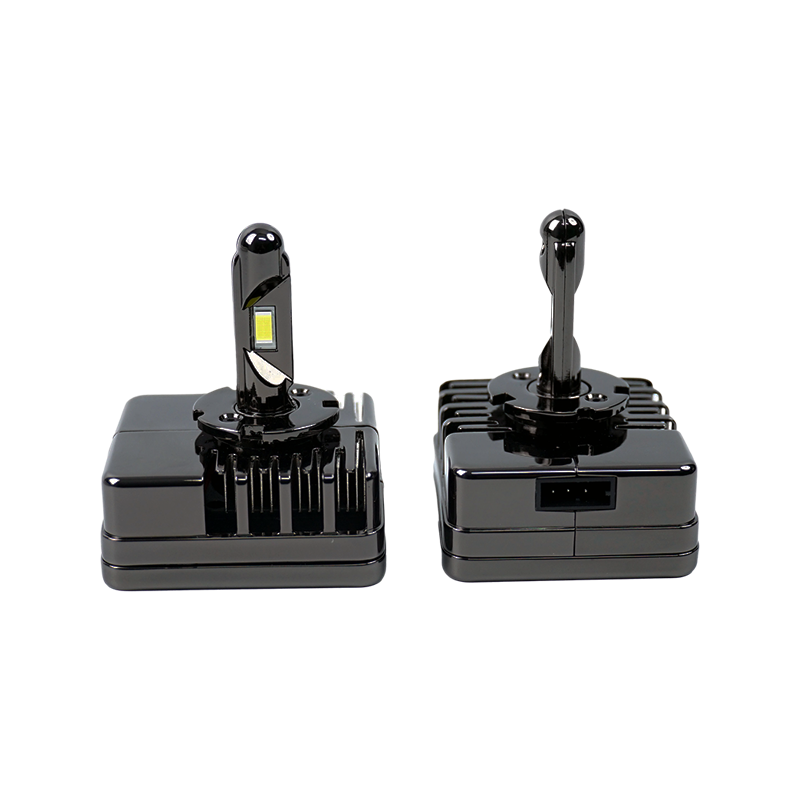
- Aviation-Grade Aluminum Heat Sinks: Extruded structures expand the available surface area to maximize thermal dissipation to the surrounding air.
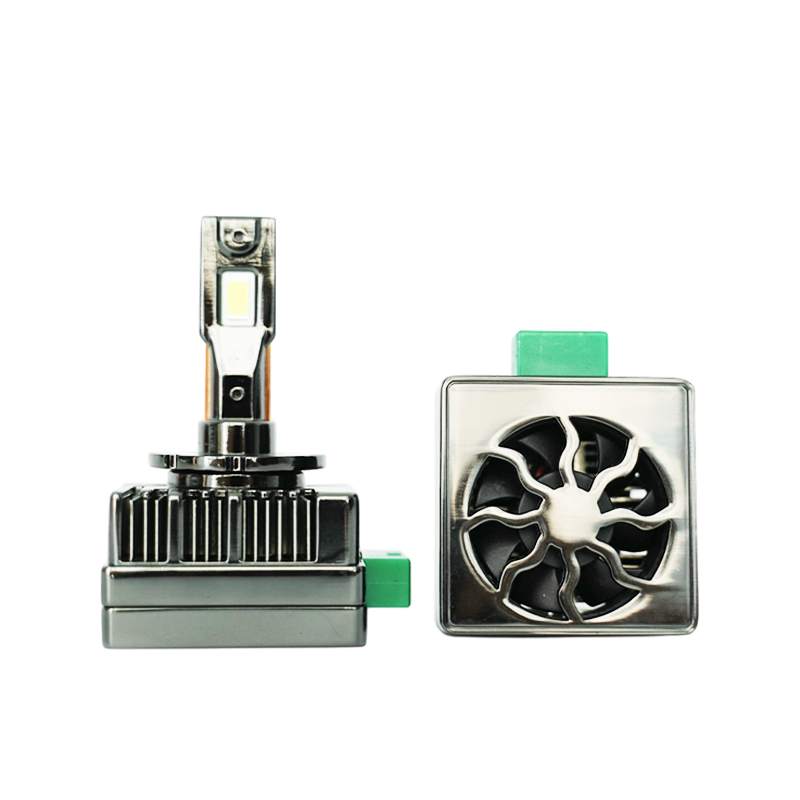
- Active Thermal Dissipation Components: High-speed brushless fans draw cool air into the housing or exhaust hot air from the assembly.
- Passive Heat Pipe Assemblies: Sintered copper tubes containing working fluid transfer thermal energy away from the optical core to a remote radiator array.
Relies on natural air currents and large aluminum fins. This design has no moving parts, preventing mechanical failure, but it requires more space behind the headlight housing.
Uses micro-fans spinning at 10,000 to 12,000 RPM. This method provides high thermal extraction in a compact size, making it easier to install inside sealed dust caps.
Photometric Characteristics and Beam Pattern Integrity
Upgrading a forward vehicle lamp is not just about increasing brightness; maintaining proper optical projection is crucial. The light distribution must follow clear cutoff lines to prevent blinding oncoming traffic. Low-beam applications require a sharp horizontal cut-off with a distinct upward slope on the passenger side to illuminate road signs.
When installing a h7 led headlight bulb into a reflector housing, the alignment of the diodes must be perfectly vertical. The light-emitting surfaces must face 3 o'clock and 9 o'clock positions relative to the housing centerline. Incorrect positioning shifts the beam upward, reducing downroad visibility and creating hazardous glare for other drivers.
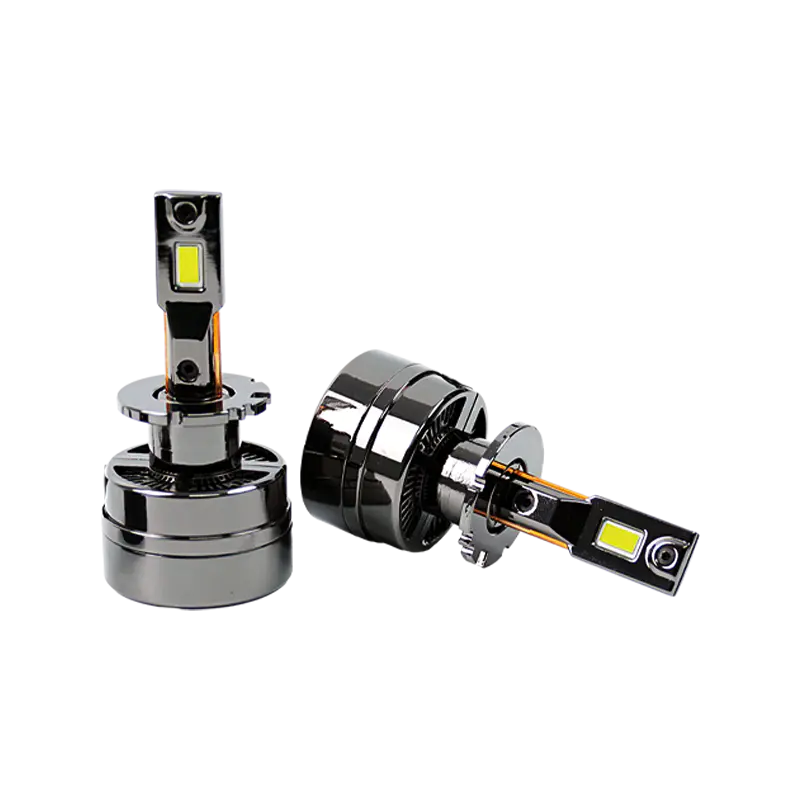
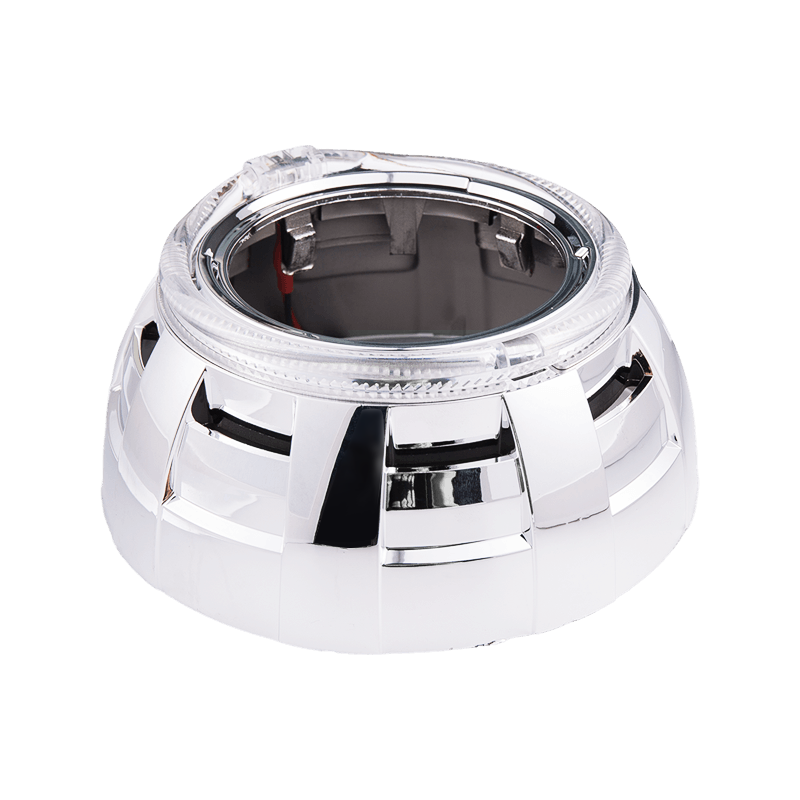
Projector lenses process light differently than open reflectors. An elliptical projector uses a internal shield to shape the cutoff line before focusing the beam through a thick glass convex lens. Solid-state options used in projectors require high central luminous intensity to project light far down the road without creating dark spots in the foreground.
Color Temperature Engineering and Environmental Visibility
When evaluating how to choose the right light bulb color temperature, it is important to understand the balance between driver comfort and optical physics. Correlated Color Temperature (CCT) is measured in Kelvin (K) and describes the color appearance of the emitted light beam.
- 3000K to 3500K (Warm Spectrum): Typical of traditional halogen configurations. This warm light penetrates moisture well but causes more eye fatigue during extended night driving.
- 6000K to 6500K (Daylight White): The standard color temperature for high-performance led lamps h7 and h11 led headlight bulbs. This spectrum matches daylight, causing less eye strain and making road markings stand out clearly.
- 7000K and Above (Cool Blue Spectrum): While visually striking, cool blue light provides fewer lumens per watt and increases glare in rain, snow, or fog due to Rayleigh scattering.
For balanced, all-weather driving safety, 6000K is the recommended target for solid-state forward lighting upgrades. This spectrum provides clear contrast without shifting into the blue wavelengths that cause glare in bad weather.
Electrical Integration and CAN bus System Management
Modern vehicle electrical systems monitor power consumption through the body control module using a Controller Area Network (CAN bus) circuit. Because a highly efficient led headlight bulb consumes less power than a 55W halogen bulb, the control module may assume the bulb is broken or missing.
This power difference can cause several electrical issues:
- Dashboard Warning Alerts: The vehicle triggers a light bulb failure message on the instrument cluster.
- Stroboscopic Flickering: The control module sends brief electrical pulses to test the circuit, causing the fast-responding diodes to flash rapidly.
- Automatic Circuit Shutdown: The safety system cuts power to the headlight socket entirely when it detects abnormal electrical loads.
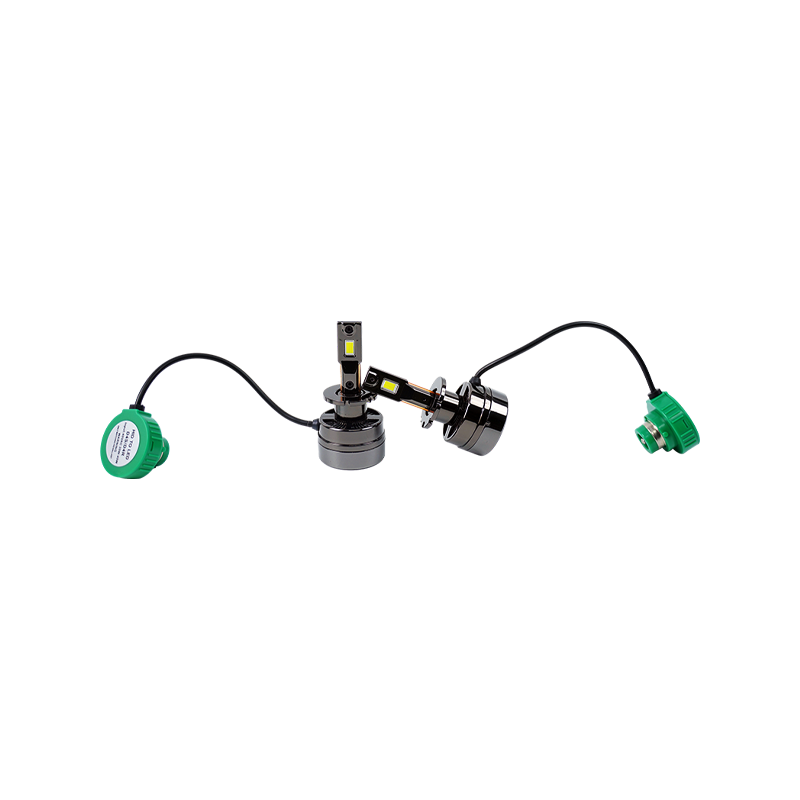
To resolve these issues, external control drivers are used. These smart modules simulate the expected electrical load and filter out the test pulses, ensuring smooth operation without modifying the vehicle's original wiring harness.
Step-by-Step Mechanical Calibration and Installation
Installing an upgraded lighting system requires careful attention to alignment and handling. The following step-by-step process ensures a precise mechanical and optical fit inside the vehicle's headlight assembly.
Step 1: Inspect the Structural Layout
Turn off the vehicle engine, remove the key, and allow the existing lighting components to cool completely. Locate the rear dust cover of the headlight housing and remove it to access the bulb retention assembly.
Step 2: Remove the Standard Bulb
Disconnect the factory electrical plug. For H7 setups, unclip the wire retention spring. For H11 setups, rotate the base counter-clockwise by 45 degrees to release the bulb from the housing. Avoid touching the glass envelope of the old bulb if you plan to keep it as a backup.
Step 3: Separate and Install the Mounting Collar
Many high-performance upgrades use a removable mounting collar. Twist and separate this adapter collar from the main body of the new bulb. Secure the collar into the headlight housing first using the factory spring clip or twist-lock mount.
Step 4: Insert and Align the Bulb Body
Insert the main bulb body through the secured collar. Rotate the bulb until the internal circuit board aligns vertically, ensuring the individual diode arrays point directly out to the sides (the 3 o'clock and 9 o'clock positions).
Step 5: Connect the Wiring and Replace Dust Caps
Connect the bulb's input wire to the vehicle's factory plug. Tuck the compact control module and any extra wiring inside the headlight housing, ensuring they stay clear of any cooling fan components. Secure the rear dust cover back in place to prevent water and dust contamination.
Frequently Asked Questions
Q1: Why does an LED bulb seem less bright down the road even though it looks brighter up close?
This happens when the light source does not align properly with the vehicle's optical housing. Incorrect alignment creates an unfocused beam that scatters light near the front bumper (foreground) instead of projecting a focused beam down the road.
Q2: Is an upgraded headlight setup compatible with daytime running light functions?
Compatibility depends on how the vehicle's daytime running lights operate. If the system drops the voltage to dim a standard high-beam bulb, the new electronic driver may flicker or refuse to turn on. Systems that use separate bulbs or full voltage pulsed power require a stabilizing module to work correctly.
Q3: How long do high-performance forward LED lamps typically last?
High-quality solid-state bulbs are designed to last over 30,000 operating hours. This long lifespan depends on effective thermal management to keep the internal semiconductor components running at safe temperatures.
Q4: What causes a headlight assembly to trap moisture or fog up after an upgrade?
Moisture accumulation occurs if the rear dust cover is not sealed correctly or if the integrated O-ring on an H11 base is torn or misaligned during installation. Ensuring a tight seal protects the delicate internal components from water and environmental damage.