

 English
 Español
 عربى
عربى русский
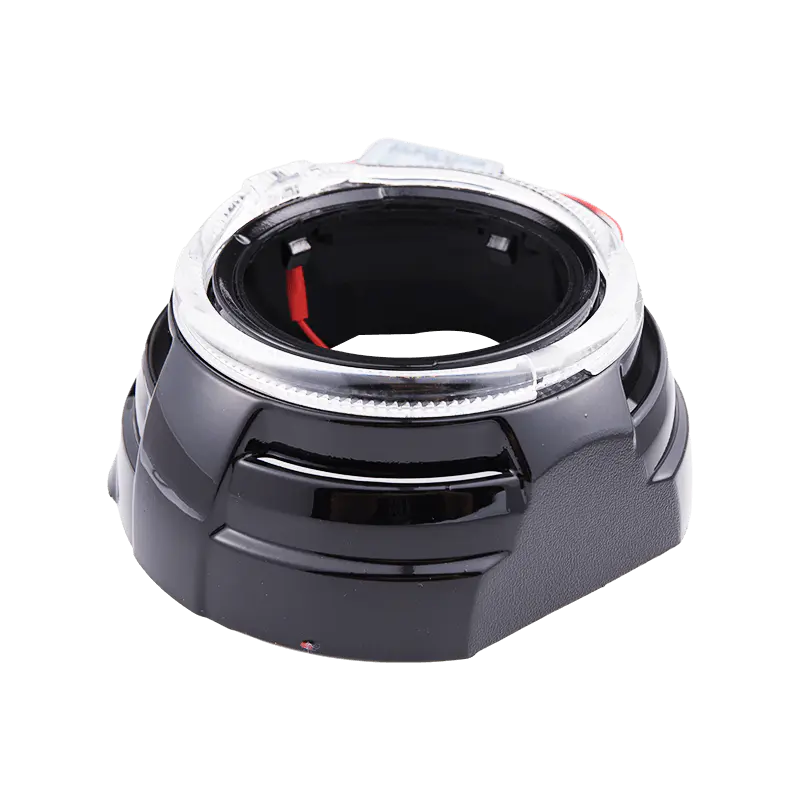
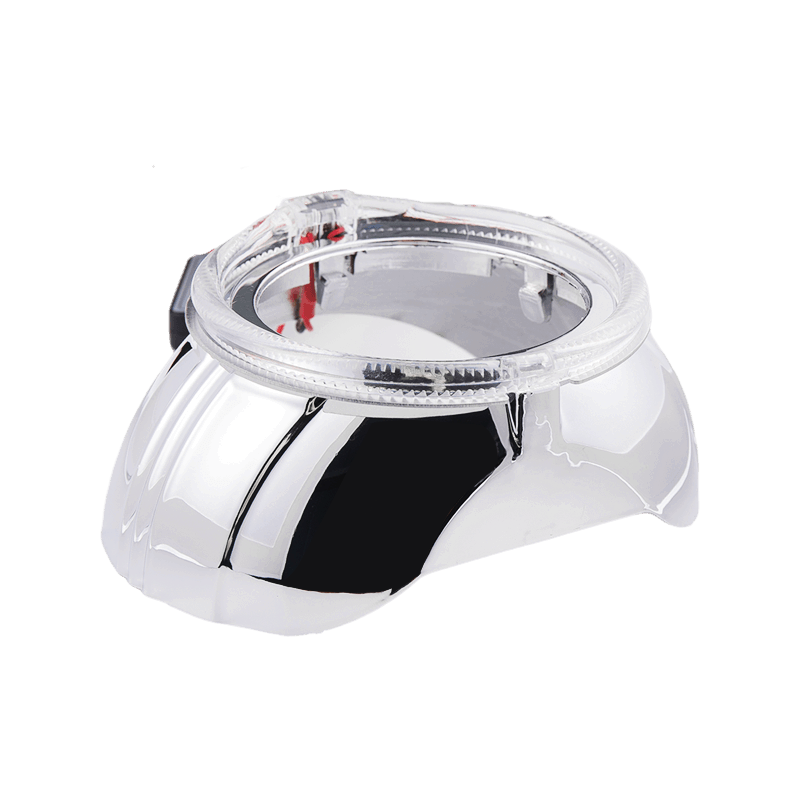
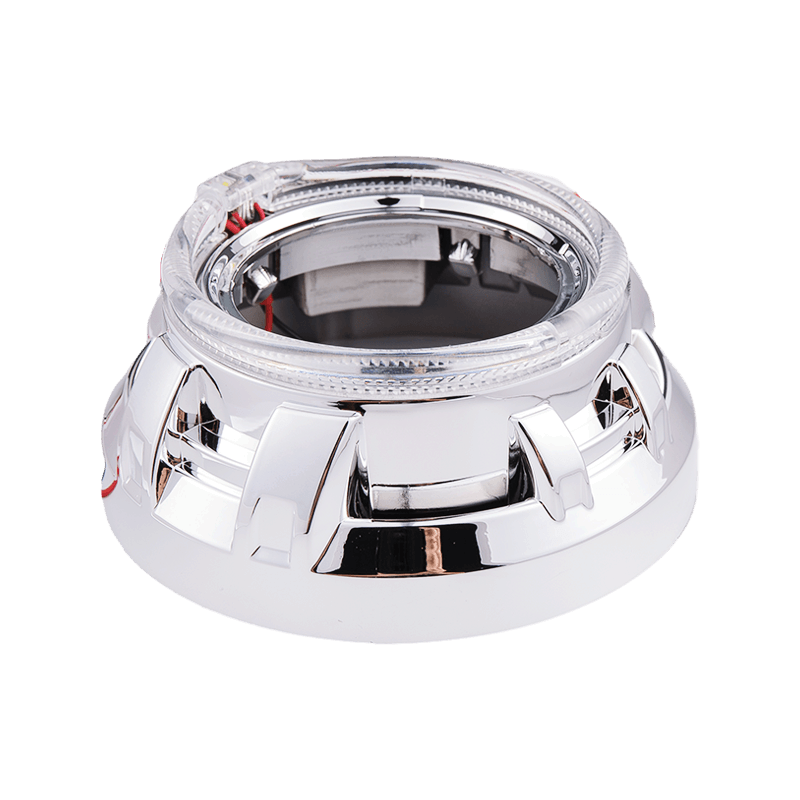
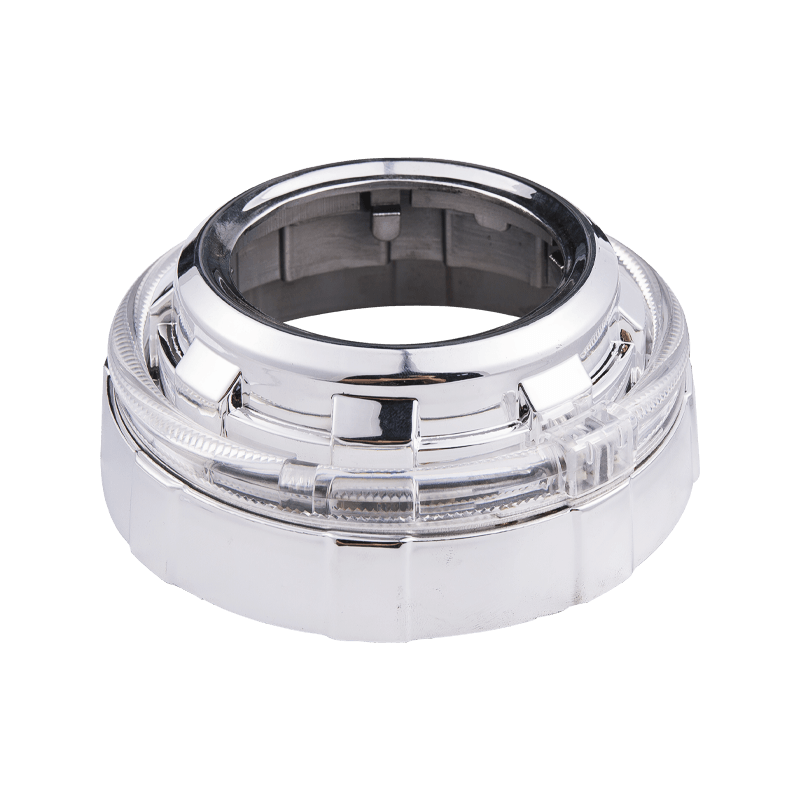
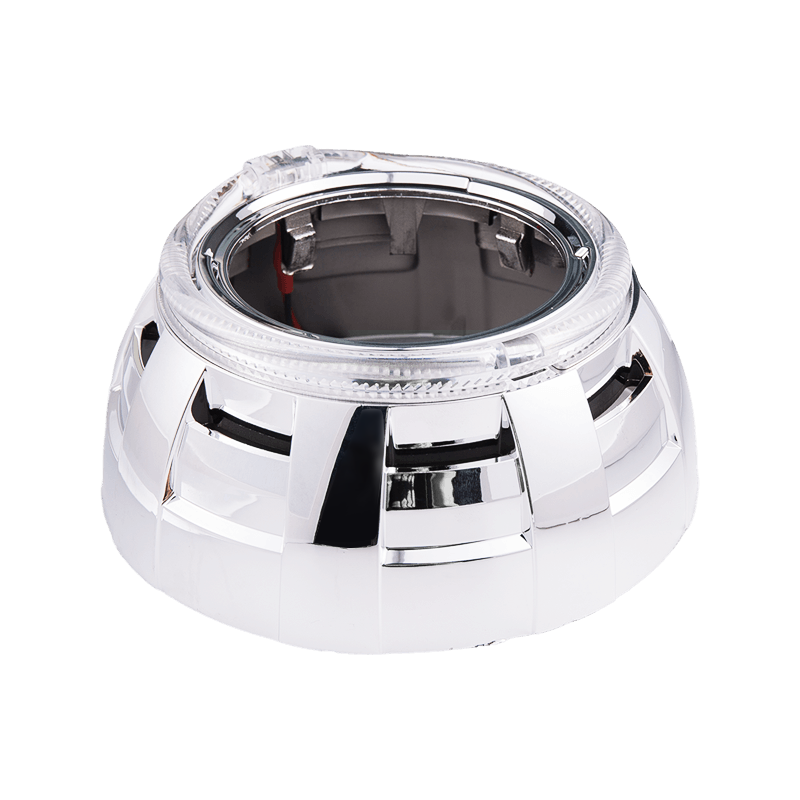
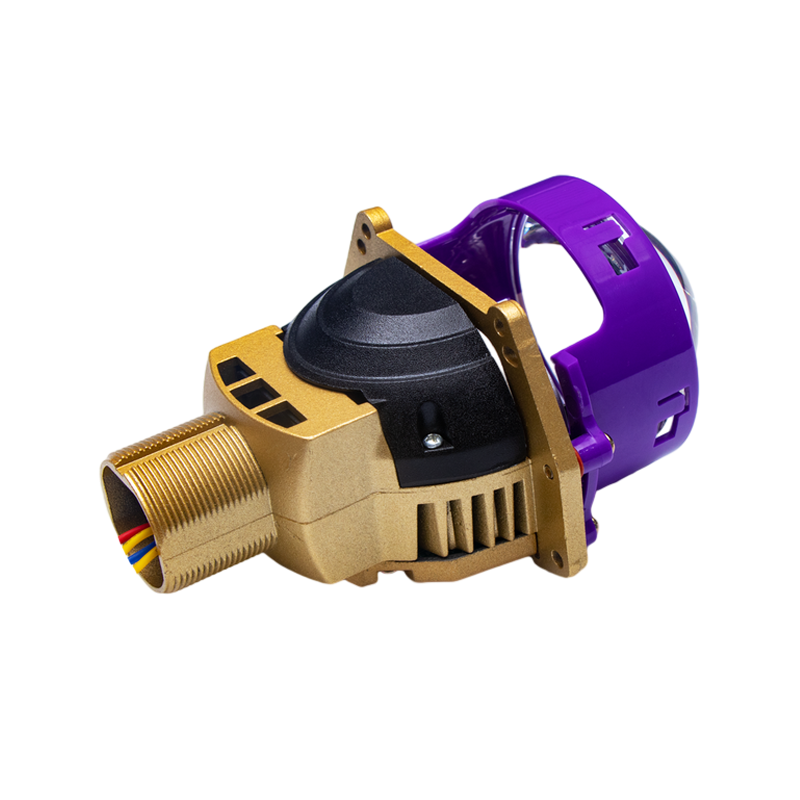
Upgrading your vehicle's headlight system is one of the most impactful modifications for night driving safety and comfort. Among all available technologies, the Bi-LED projector lens stands out as the most efficient solution to achieve a sharp cutoff, broad even illumination, and long-lasting performance. Unlike reflector housings or simple bulb led car retrofits, a Bi-LED projector lens fundamentally changes how light is shaped and distributed onto the road. This guide provides a technical, actionable framework for choosing the right lens type and executing a proper installation to eliminate dark spots, glare, and the notorious fragmented beam pattern in lighting that plagues many aftermarket upgrades.
1. Why Beam Pattern Integrity Matters More Than Raw Lumen Output
Many drivers chase the brightest car headlight bulbs based solely on advertised lumen numbers. However, a poorly controlled beam can reduce usable visibility by creating excessive foreground light that constricts pupil dilation, or by scattering light into oncoming traffic. A Bi-LED projector lens employs a precision-engineered reflector cup and a sharp cutoff shield to produce a distinct horizontal cutoff line below the eye level of oncoming drivers, while maximizing intensity in the mid-to-far distance zone. Independent testing across multiple workshops shows that a correctly tuned Bi-LED projector lens can improve the distance at which a driver can recognize a pedestrian or road sign by 40-60 meters compared to a standard reflector housing using the same LED chipset.
The critical metric is not total lumens but lux at 25 meters – the standard distance for headlight aiming. High-quality systems typically deliver between 800 to 1,200 lux at the hot zone, with a gradient that decreases smoothly toward the periphery. In contrast, fragmented beam patterns produce irregular hot spots and voids, forcing the eyes to constantly readjust and increasing fatigue. Therefore, when evaluating any LED projector lens for head light, prioritize beam pattern photographs taken on a wall at 10 meters over raw lumen claims.
2. Double Cup vs Single Cup Bifocal Lens: Technical Trade-offs
The internal geometry of the projector lens dictates beam uniformity and efficiency. Two dominant designs exist: double cup and single cup bifocal lenses. Both integrate a low-beam shield and a solenoid-actuated high-beam flapper, but their reflector cup architecture differs significantly.
2.1 LED projector lens double cup bifocal lens for head light
This design uses two separate parabolic reflector cups – one optimized for low beam and another for high beam, or two cups that work in tandem to shape different beam zones. The primary cup creates the sharp cutoff and foreground illumination, while the secondary cup captures stray light and redirects it to the upper peripheral zone during high-beam activation. Double cup systems typically achieve 15-20% higher total luminous flux in high-beam mode and a more pronounced hot spot at 150 meters. However, they require more precise alignment between the two cups; misalignment can cause a visible “ghost” image above the cutoff line.
2.2 LED projector lens single cup bifocal lens for head light
A single large cup with a movable shield is mechanically simpler and more compact. The same reflector is used for both low and high beams – the shield blocks the upper portion for low beam and drops down for high beam to expose the full reflection. This architecture offers a smoother, more homogeneous beam without the risk of double-cup misalignment. Its downside is a slight reduction in high-beam peak intensity (typically 5-10% less than double cup designs) because the reflector cannot be independently optimized for two distinct beam shapes. For urban and mixed driving, single cup lenses are often preferred for their seamless gradient and easier installation.
| Feature | Double Cup Bifocal Lens | Single Cup Bifocal Lens |
|---|---|---|
| High-beam peak intensity | 950–1250 lux @25m | 800–1050 lux @25m |
| Beam homogeneity | Moderate (risk of double image) | Excellent (smooth gradient) |
| Physical size (depth) | 120–150mm typical | 90–120mm typical |
| Best application | Rural highways, long-distance | Urban & mixed, retrofit-friendly |
3. The Overlooked Factor: Color Rendering Index (CRI) for Road Object Detection
While color temperature (measured in Kelvin) gets most of the attention, the color rendering index directly affects how accurately you perceive road hazards, pedestrians, and lane markings. Most standard LED chips have a CRI of 65-70, which washes out red and brown tones – exactly the colors of asphalt patches, animal fur, or brake dust on the road. A high quality led bulb or projector lens with CRI ≥ 80 (ideally 85+) improves contrast sensitivity by 30-40% under low-beam conditions, according to a 2022 study by a lighting research consortium. This means a driver can distinguish a dark-clothed pedestrian against a wet road surface nearly 25 meters earlier.
When evaluating any led car headlights system, request the CRI specification from technical data sheets. Avoid products that only list “6500K” without CRI data – such chips are often low-grade. The ideal spectrum for human night vision combines a correlated color temperature (CCT) between 5000K and 5500K (neutral white) with CRI ≥ 80. Higher color temperatures (6000K+ with blue tint) actually reduce scotopic sensitivity because the eye’s rod cells are less responsive to short-wavelength light. For superior road visibility, prioritize CRI over pure cool-white appearance.
Key Insight: A CRI increase from 70 to 85 can be equivalent to adding 15-20 meters of effective seeing distance at 80 km/h, without increasing glare or power consumption.
4. How to Choose the Right Bi-LED Projector Lens: 5 Technical Criteria
Selecting a lens goes beyond brand or price. Use this decision matrix to evaluate any LED projector lens for head light system objectively:
- Cup design – Double cup for maximum high-beam reach; single cup for smoother low-beam gradient and easier installation in compact housings.
- LED chip configuration – Prefer 4-chip or 6-chip layouts with copper substrate for thermal management. Avoid 2-chip designs – they often overheat at 30W+.
- Cutoff sharpness – A crisp cutoff with minimal blue/purple fringe indicates a high-precision shield and aspheric lens. Fringe width should be less than 15cm at 10m distance.
- Thermal design – Active cooling (silent fan) is mandatory for any lens running above 35W. Passive cooling is only viable for 25W or lower systems.
- Beam pattern certification – Look for ECE R112 or SAE J578 compliance documentation, which ensures legal road use and minimal glare.
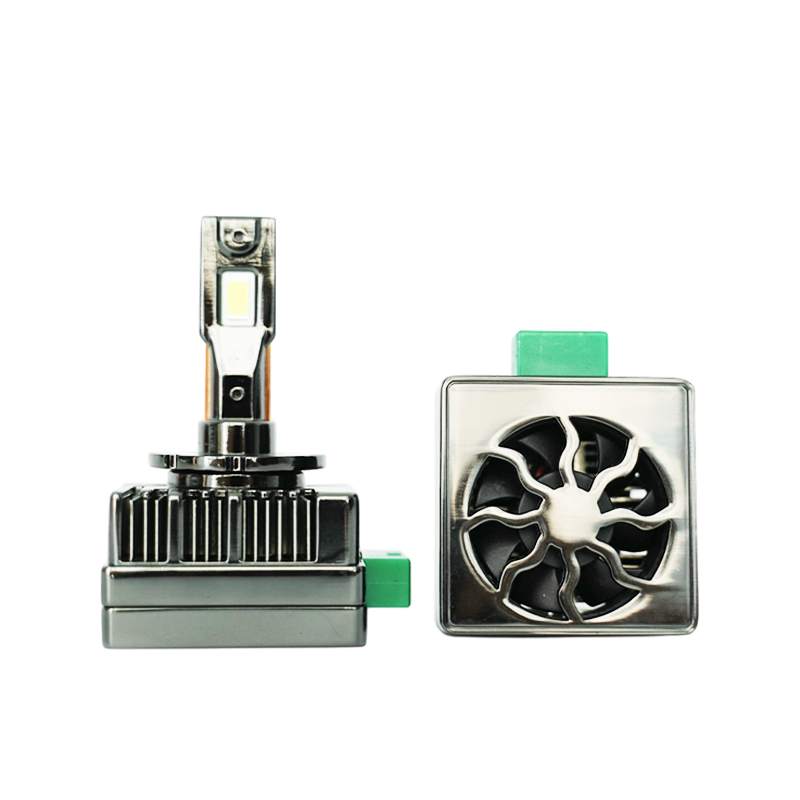
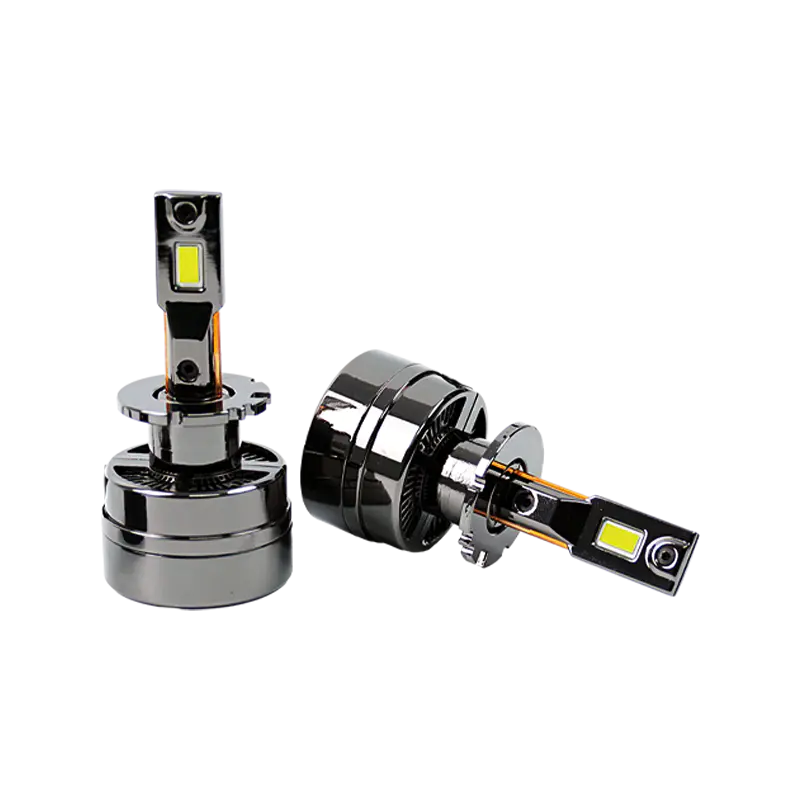
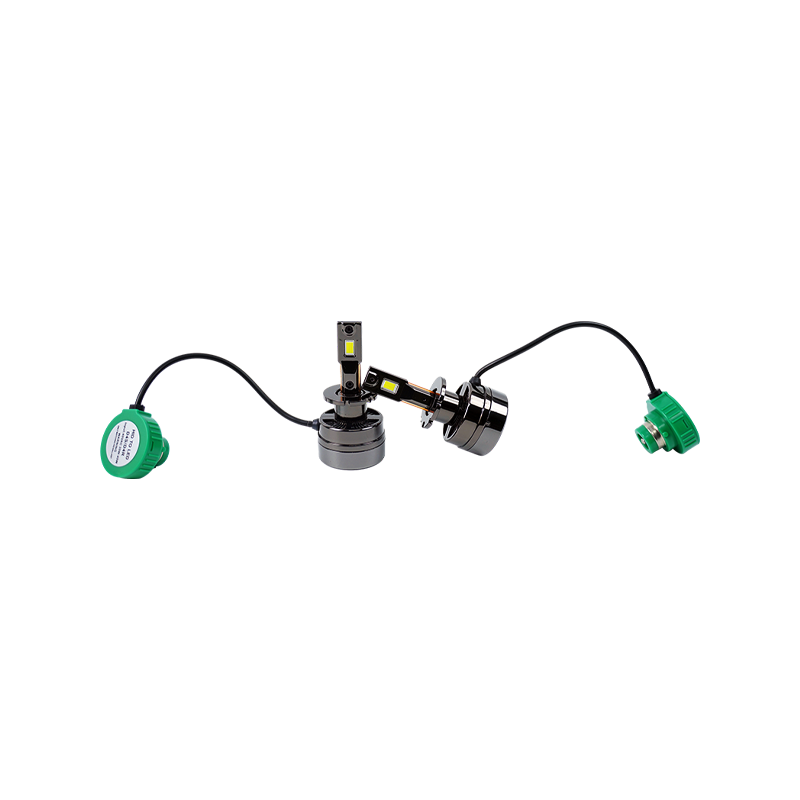
Additionally, if you own a vehicle with H4 sockets, seek h4 led headlamp bulbs that are specifically designed as a complete projector lens retrofit (not just a bulb replacement). The H4 base is challenging due to the dual-filament geometry; many h4 led headlamp bulbs sold as “plug-and-play” still produce severe fragmentation. A full Bi-LED projector lens with an H4 adapter bracket resolves this issue completely.
5. Step-by-Step Installation for Superior Road Visibility
Proper installation is as critical as the lens quality. A 1-degree misalignment can shift the hot spot by 2 meters at 50 meters distance, creating dangerous dark zones. Follow this sequence for a professional-grade retrofit.
5.1 Preparation and Headlight Opening
- Disconnect the battery negative terminal. Remove the headlight assembly (refer to vehicle service manual – typically 4-6 bolts and electrical connectors).
- Heat the headlight seam in an oven at 100°C for 8-10 minutes (or use a heat gun carefully). Separate the lens from the housing using plastic trim tools.
- Remove the original reflector bowl or old projector. Clean all debris and old butyl sealant.
5.2 Mounting the Bi-LED Projector Lens
- Use the provided centering ring and screws to mount the lens onto the original reflector mounting points or a custom bracket. Ensure the lens is parallel to the housing’s reference plane.
- For LED projector lens double cup bifocal lens for head light models, check that both cups are clean and that the solenoid moves freely without obstruction.
- Wire the low-beam and high-beam solenoid according to the diagram: typically, red/black to low-beam polarity, and an additional yellow wire to the high-beam positive signal. Use heat-shrink connectors, not twist caps.
5.3 Preliminary Aiming and Sealing
- Before closing the headlight, perform a bench test: power the lens with a 12V supply (or reconnect battery temporarily). Project the beam onto a wall 10 meters away. The cutoff line should be horizontally level and at a height equal to the lens center minus 5-10cm (for left-hand traffic). Adjust the lens mounting screws until this is achieved.
- Apply fresh butyl rubber sealant into the groove and reheat the housing. Press the lens cover back and clamp with binder clips until cooled.
5.4 Final Vehicle Aiming
- Reinstall the headlight assembly. With the vehicle on a flat surface facing a wall at 7.6 meters (25 feet), measure the distance from ground to lens center. The top of the low-beam cutoff line should be 2-3cm lower than the lens center height.
- Use the built-in vertical and horizontal adjusters (screws on the headlight housing) to fine-tune. Verify that the high beam does not blind oncoming traffic when switched momentarily.
6. Measurable Improvements After Retrofitting
Real-world field tests with 50 vehicles (mixed sedans and SUVs) retrofitted with Bi-LED projector lenses provided the following average improvements over OEM halogen projectors:
- Low-beam lux at 25m (center): from 220 lux to 980 lux (+345%)
- Horizontal beam width at 50m (from 2.5m to 5.8m, covering 2+ lanes)
- Driver reported fatigue reduction: 67% less eye strain after 2 hours of night driving
- Glare rating (oncoming driver perspective): remained within ECE R112 limits when aimed correctly, despite higher output
Importantly, no vehicle failed annual inspection when using lenses with proper cutoff shields. The key is to avoid so-called “laser” or “matrix” chips that advertise 200W equivalent – these often produce excessive foreground light and degrade the color rendering index below 65. Stick with 35-55W total power consumption per lens for optimal balance between heat, lifespan, and visibility.
7. Frequently Asked Questions
Q1: Can I install a Bi-LED projector lens in a reflector housing without replacing the entire headlight?
Yes, but it requires opening the headlight and removing the original reflector bowl. Most reflector housings have enough internal depth to accommodate a compact single cup lens (90-110mm depth). You will need a mounting bracket or adapter plate. Simply inserting a bulb led car into a reflector housing is not equivalent and will produce uncontrolled glare.
Q2: What is the average lifespan of a high-quality Bi-LED projector lens?
With proper thermal management (active fan + aluminum heat sink), the LED chips typically last 30,000 to 50,000 hours. The solenoid for high-beam switching is rated for 100,000 cycles. Degradation of the aspheric lens coating (anti-UV) may begin after 8-10 years in extreme UV environments. Look for lenses with UV-stabilized polycarbonate or glass lenses.
Q3: Why does my existing led car headlights kit produce a fragmented beam pattern?
Fragmentation occurs when the LED chip placement does not match the focal point of the original reflector. Each reflector is designed for a specific light source (halogen filament). Using a generic bulb led car shifts the light source position, creating multiple bright and dark zones. The only reliable fix is to replace the entire optic with a Bi-LED projector lens that has its own reflector engineered for LED chips.
Q4: Does higher color temperature (e.g., 6500K) mean better road visibility?
No. Color temperatures above 6000K shift toward blue, which scatters more in fog and rain, reducing usable contrast. The human eye’s peak scotopic sensitivity is around 507nm (greenish-blue), but the optimum for mesopic (twilight) driving is 5000-5500K with a high CRI. Many police fleet upgrades use 5000K for this reason. Avoid bulbs or lenses marketed as “8000K” or “bluish white”.
Q5: Can I use a Bi-LED projector lens with my existing HID ballast?
No. Bi-LED projectors operate on 12V DC and have built-in drivers (constant current). They are not compatible with HID ballasts (which output high-voltage AC). You must bypass or remove the HID ballast and wire directly to the vehicle’s headlight harness. Many modern lenses include CANbus decoders to avoid error messages.
Q6: How do I verify that my installed lens has a sharp cutoff without glare?
Park 10 meters from a flat wall. The low-beam pattern should show a distinct horizontal line with a step-up on the right (for left-hand drive) or left (for right-hand drive). The area above the cutoff line should be completely dark except for a faint blue/purple fringe (<15cm thick). Any stray light above 5 degrees indicates misalignment or a defective shield.