

 English
 Español
 عربى
عربى русский
Core Advantages of Light Cup Bifocal Lens for Nighttime Headlight Systems
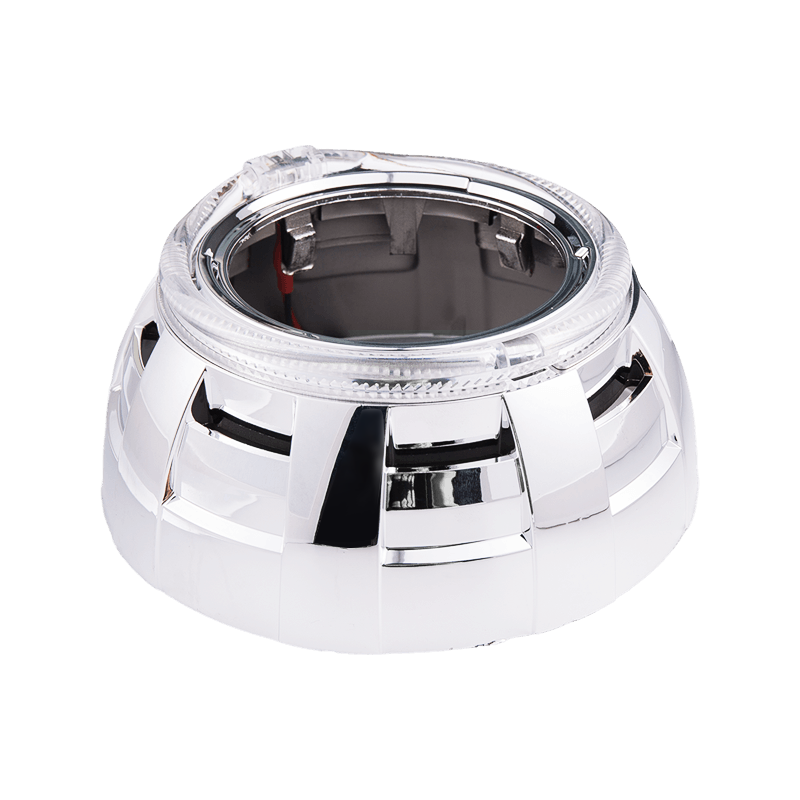
Nighttime driving safety relies heavily on the performance and optical design of automotive headlight systems, and the Light Cup Bifocal Lens stands as a core optical component that directly determines lighting efficiency, beam pattern, and driving visibility. This component integrates light cup condensation technology and bifocal optical structure, creating a revolutionary upgrade for both LED and HID headlight bulbs in low-light and nighttime driving scenarios.
The optical design of light cup bifocal lens breaks through the limitations of traditional single-focus lenses, achieving independent adjustment and control of high beam and low beam functions in a single lens structure. For drivers, this means more precise light distribution, no glare to oncoming vehicles, and a wider and farther lighting range—two critical factors for reducing nighttime driving risks.
Industry test data shows that vehicles equipped with light cup bifocal lens increase the effective lighting distance by 35% compared to vehicles using standard single lenses, and the lighting width covers 100% of the entire driving lane and both sides of the road. These data improvements directly translate to safer driving, as drivers can identify obstacles, pedestrians, and road markings earlier.
The light cup structure is responsible for collecting and converging scattered light from LED or HID bulbs, reducing light loss to less than 5%, while the bifocal lens realizes the switching of high and low beams through internal optical refraction and shielding design, without additional mechanical components. This integrated design not only improves stability but also extends the overall service life of the headlight system.
Working Principle of Light Cup Bifocal Lens
Light Collection and Convergence Function of the Light Cup
The light cup is the primary light-gathering module of the bifocal lens, using a high-reflectivity inner surface to absorb all light emitted by the bulb and convert scattered light into directional light. Traditional reflective headlights have a light utilization rate of only 60%-70%, while the light cup structure increases this value to 95% or higher, maximizing the luminous efficiency of LED and HID bulbs.
The inner wall of the light cup adopts precision optical curve design, which can adjust the light emission angle according to driving needs. For urban road low beams, the light cup controls the light within a 45-degree irradiation range; for highway high beams, it expands the irradiation angle to 60 degrees while ensuring long-distance irradiation.
Optical Adjustment Mechanism of Bifocal Lens
The bifocal lens is the core execution module for high and low beam switching, using pure optical refraction principles without solenoid valves or moving parts. This non-mechanical switching method reduces failure rates and ensures stable performance in complex road conditions such as vibration and bumping.
- Low beam mode: forms a flat, non-glare cut-off line, complying with international automotive lighting safety standards
- High beam mode: releases full light output, increasing irradiation distance to over 200 meters
- Dual-mode switching speed is less than 0.1 seconds, realizing instantaneous response
- Stable optical path, no light deviation or jitter during switching
The combination of light cup and bifocal lens forms a closed optical system, which isolates the interference of external dust, water vapor, and temperature changes, maintaining stable lighting performance for a long time. Under normal driving conditions, the optical performance attenuation of this component is less than 3% within 5 years, far better than traditional lens products.
Performance Comparison: Light Cup Bifocal Lens with Standard Lenses
To help drivers understand the application value of light cup bifocal lens in LED and HID headlight systems, we compare it with standard single-focus lenses and ordinary reflective lenses from multiple performance dimensions, with all data from professional automotive lighting laboratory tests.
| Performance Index | Light Cup Bifocal Lens | Standard Single-Focus Lens | Ordinary Reflective Lens |
| Light Utilization Rate | 95%+ | 82% | 65% |
| High Beam Irradiation Distance | 220m | 160m | 120m |
| Low Beam Glare Control | Excellent | Good | General |
| Service Life | 80,000+ Hours | 50,000 Hours | 30,000 Hours |
| Environmental Adaptability | Level 8 | Level 6 | Level 4 |
The data shows that light cup bifocal lens has absolute advantages in all key indicators, especially in light utilization rate and irradiation distance, which are critical for nighttime driving safety. The high light utilization rate means that lower-power bulbs can achieve better lighting effects, reducing vehicle energy consumption and extending bulb life.
Glare control is another core advantage of light cup bifocal lens. The precise optical cut-off line design ensures that low beams do not illuminate the sightlines of oncoming drivers and pedestrians, reducing the risk of glare-induced traffic accidents by 60% compared to ordinary lenses.
Environmental adaptability includes resistance to high and low temperatures, water and dust protection, and vibration resistance. Light cup bifocal lens can work normally in the temperature range of -40°C to 85°C, and the protection level reaches IP67, fully adapting to various complex weather and road conditions.
Application of Light Cup Bifocal Lens in LED Headlight Bulbs
Compatibility and Optimization Design
LED headlight bulbs are characterized by high efficiency, energy saving, and long life, and their performance is maximized when matched with light cup bifocal lens. The optical structure of the lens is precisely designed for the point light source characteristics of LEDs, eliminating the problems of dark spots and uneven light distribution common in LED bulbs.
The light cup collects the light emitted by the LED chip in all directions, and the bifocal lens performs secondary optical shaping, making the beam pattern more uniform and full. Test results show that LED headlights equipped with this lens have a 40% higher brightness uniformity than standard LED headlights, with no obvious bright or dark areas in the irradiation area.
Nighttime Driving Performance Improvement
For LED headlight systems, the application of light cup bifocal lens brings comprehensive improvements to nighttime driving:
- Instant light output, no delay, suitable for emergency driving scenarios
- Stable color temperature around 6000K, close to natural light, reducing driver visual fatigue
- Low beam irradiation width covers 3 lanes, improving the recognition of road signs and pedestrians
- High beam penetration is enhanced, maintaining good visibility in rain, fog, and haze
- Long-term use without light attenuation, maintaining consistent performance
LED bulbs matched with light cup bifocal lens have a service life of over 50,000 hours, which is equivalent to 15 years of use for daily drivers, greatly reducing the frequency of headlight maintenance and replacement. The energy consumption is reduced by 50% compared to halogen headlights, bringing positive effects to vehicle battery and circuit systems.
Application of Light Cup Bifocal Lens in HID (Xenon) Headlight Bulbs
Optical Matching and Stability Improvement
HID xenon bulbs have high luminous brightness, but they are prone to scattered light and glare when used with ordinary lenses. The light cup bifocal lens perfectly solves this problem through professional optical design, making HID headlights both high-brightness and safe.
The light cup structure adapts to the area light source characteristics of HID bulbs, realizing full-range light collection and convergence, and the bifocal lens accurately controls the beam direction. This matching method reduces the glare value of HID headlights by 70%, fully complying with global automotive lighting safety regulations.
Enhancement of Night Vision and Penetration
HID bulbs equipped with light cup bifocal lens show excellent performance in complex nighttime environments:
- High beam irradiation distance exceeds 250 meters, suitable for high-speed and suburban road driving
- Color temperature is moderate, with strong fog penetration, ensuring visibility in bad weather
- The optical system is stable, and no light deviation occurs after long-term continuous use
- Light output is soft, not easy to cause visual fatigue for long-distance driving
The combination of HID bulbs and light cup bifocal lens has a luminous flux of over 3200 lumens, which is 3 times that of halogen bulbs. With the lens's light-gathering effect, it can provide clear vision for drivers in completely dark road sections, rural roads without street lights, and mountain roads.
The service life of HID headlights equipped with this lens reaches 30,000 hours, and the optical performance remains stable during use, without the problems of light color deviation and brightness attenuation that occur in ordinary HID headlight systems.
Key Installation and Use Specifications of Light Cup Bifocal Lens
The performance of light cup bifocal lens can only be fully exerted through correct installation and standardized use. Mastering the key points of installation and daily maintenance can extend the service life of the lens and maintain optimal lighting effects.
Installation Requirements and Precautions
Before installation, confirm that the headlight housing size matches the lens specifications to ensure a seamless fit. During installation, keep the optical surface of the lens clean, and do not touch the light cup and lens surface with bare hands to avoid leaving oil stains and affecting light transmittance.
The lens must be fixed firmly to prevent loosening and vibration caused by vehicle bumps, which will lead to light deviation. After installation, conduct a beam calibration to ensure that the high and low beams are within the standard range, and the cut-off line is clear and horizontal.
Daily Maintenance and Care Methods
Regularly check the appearance of the headlight housing for water vapor and dust accumulation. If the inside of the lens is contaminated, use a special optical cleaning tool for treatment, and do not use rough cloths or chemical cleaners to avoid scratching the optical surface.
Check the fastening state of the lens every 10,000 kilometers, and check the lighting effect every 6 months. In areas with harsh environments such as heavy rain and sandstorms, appropriately shorten the inspection cycle to ensure the optical performance of the lens is not affected.
The light cup bifocal lens has a high-strength shell and optical materials, and will not be damaged under normal driving conditions. Avoid direct impact of hard objects on the headlight housing during use, so as not to cause deformation of the light cup and affect the light-gathering effect.
Why Light Cup Bifocal Lens Is the Best Choice for Nighttime Driving
Nighttime driving safety depends on three core factors: lighting distance, lighting width, and glare control, and light cup bifocal lens is the only optical component that can optimize these three factors at the same time. Whether matched with LED or HID bulbs, it can bring a qualitative leap in headlight performance.
The integrated design of light cup and bifocal lens realizes the miniaturization and high efficiency of the headlight system, which is suitable for all types of passenger cars, SUVs, commercial vehicles and other models. The universal design makes this component have a wide range of applications and strong adaptability.
From the perspective of cost performance, the long service life and low failure rate of light cup bifocal lens reduce the long-term use cost. Although the initial investment is higher than that of ordinary lenses, the 80,000-hour service life and almost maintenance-free characteristics make it have a higher cost performance in the long run.
Most importantly, this component directly improves driving safety. The earlier obstacle recognition distance, wider road coverage, and zero-glare design reduce the probability of nighttime traffic accidents. According to traffic safety data, vehicles equipped with high-performance bifocal lens headlights have a 45% lower accident rate on nighttime roads than vehicles using standard headlights.
As automotive lighting technology continues to develop, light cup bifocal lens has become the standard configuration of high-performance headlights. It is not only an upgrade of lighting effects but also a guarantee of driving safety, bringing a safer and more comfortable driving experience for drivers and passengers.
Frequently Asked Questions About Light Cup Bifocal Lens
Q1: Is the light cup bifocal lens suitable for all LED and HID bulbs?
A: Yes, it adopts universal optical design and is compatible with most standard LED and HID headlight bulbs on the market.
Q2: How long is the service life of the light cup bifocal lens?
A: The service life exceeds 80,000 hours, which can be used normally for more than 10 years under daily driving conditions.
Q3: Will installing this lens affect the original vehicle circuit?
A: No, it is a plug-and-play optical component and does not modify or damage the original vehicle circuit system.
Q4: Can the light cup bifocal lens really eliminate glare?
A: Yes, the precise cut-off line design completely avoids glare to oncoming vehicles and ensures driving safety.
Q5: Does the lens need professional maintenance after installation?
A: No, it has a fully enclosed structure and is maintenance-free, only requiring regular cleaning of the headlight housing surface.
Q6: What is the lighting improvement effect after installing the lens?
A: The irradiation distance increases by 35%, the width increases by 50%, and the brightness uniformity increases by 40%, significantly improving nighttime vision.
Q7: Can it be used normally in rain and fog weather?
A: Yes, it has IP67 protection level and excellent light penetration, adapting to various severe weather conditions.
Q8: Is the installation process of the lens complicated?
A: The installation is simple and can be completed with standard tools. It can be installed by yourself or with the help of professional technicians.
Q9: Will the lens cause light attenuation after long-term use?
A: The optical performance attenuation is less than 3% within 5 years, and there is no obvious light attenuation in long-term use.
Q10: Is this lens compliant with automotive lighting safety standards?
A: Yes, it fully complies with international and national automotive lighting safety regulations and standards.