

 English
 Español
 عربى
عربى русский
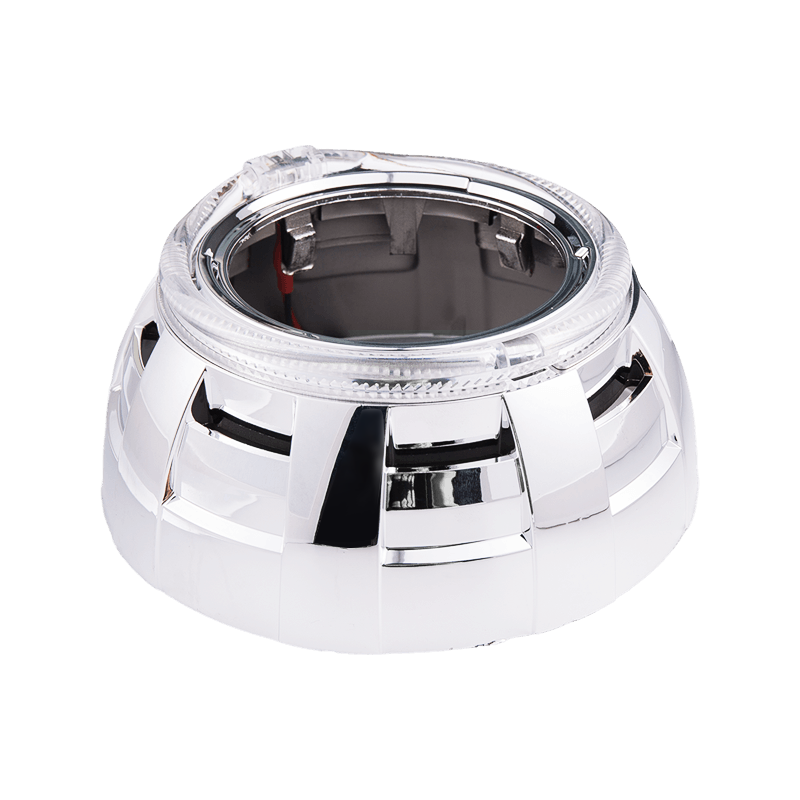
Bifocal lenses are essential in modern automotive lighting because they solve a fundamental problem: a single optical zone cannot simultaneously deliver a wide, safe low beam and a powerful, long-range high beam. By integrating two distinct focal zones into one lens body, bifocal lenses optimize light distribution for both driving modes — improving road safety, reducing glare for oncoming drivers, and maximizing luminous efficiency. The Light Cup Bifocal Lens is a prime example of how advanced optical engineering addresses these real-world demands.
What Is a Bifocal Lens and How Does It Work?
A bifocal lens contains two optically distinct zones within a single lens element. Each zone is engineered with a different focal length or curvature, allowing it to handle a specific lighting task:
- Zone 1 (Low Beam Area): Produces a wide, flat beam pattern with a sharp cutoff line to illuminate the road ahead without blinding oncoming traffic.
- Zone 2 (High Beam Area): Concentrates light into a long, narrow beam to maximize forward visibility at higher speeds or in rural areas.
This dual-zone design means the headlight assembly does not need to switch between two separate lenses or optical units — one compact lens performs both functions, reducing weight and complexity.
Core Reasons Why Bifocal Lenses Are Necessary
1. Precise Beam Pattern Control
Standard single-focus lenses spread light broadly but lack precision. Bifocal lenses allow engineers to define exactly where light falls on the road. Regulations in many markets — including ECE R112 and SAE J1383 — require specific beam pattern standards. Bifocal lens geometry is engineered to meet these cutoff and illuminance requirements without secondary optical components.
2. Reduced Glare for Oncoming Traffic
Glare is one of the leading contributors to nighttime traffic accidents. Studies indicate that over 30% of nighttime accidents are related to poor headlight beam control. The bifocal design creates a hard cutoff line in the low-beam zone, preventing stray light from reaching the eye level of approaching drivers — a critical safety feature.
3. Higher Luminous Efficiency
By directing light exactly where it is needed, bifocal lenses minimize wasted lumens. A well-designed bifocal lens can achieve utilization rates exceeding 80% of the light source output, compared to 50–60% for conventional reflector-based systems. This means brighter roads without requiring a more powerful — and more energy-consuming — light source.
4. Compact and Lightweight Design
Combining two optical functions into one lens body reduces the total number of components in a headlight assembly. This simplification leads to:
- Smaller headlight housings
- Reduced assembly weight (typically saving 15–25% compared to dual-lens systems)
- Lower manufacturing costs over the product lifecycle
5. Compatibility with LED and High-Intensity Light Sources
Modern LED light sources are point-like emitters with very high luminance. This characteristic makes them ideal for use with precision bifocal lenses, as the optical zones can be engineered at a fine scale to take full advantage of the small emitter size. LED-based bifocal projector systems can deliver over 1,500 lux at 25 meters — a significant improvement over halogen-based designs.
Light Cup Bifocal Lens: Key Technical Advantages
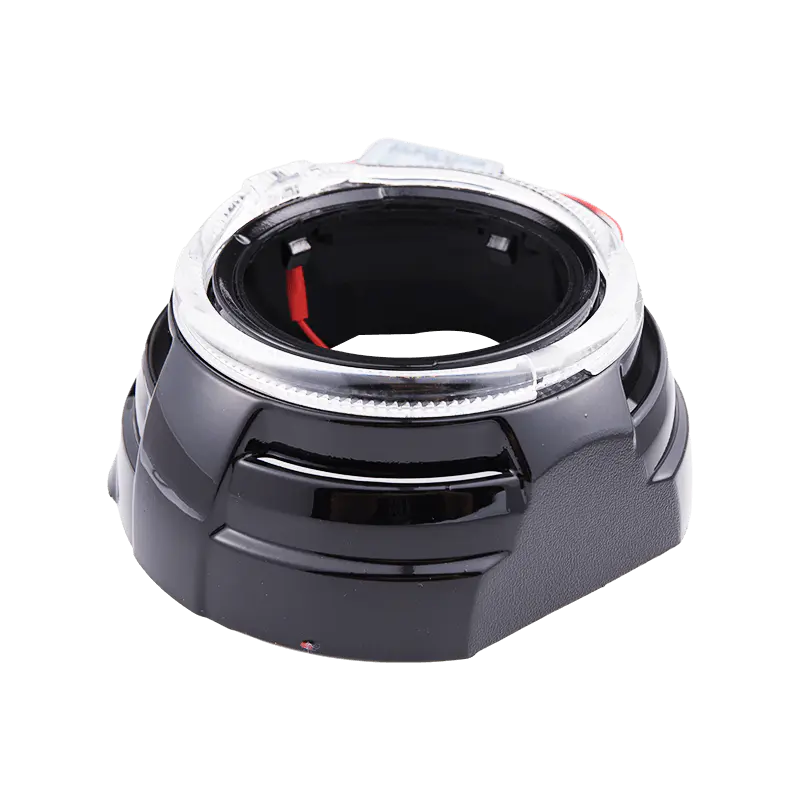
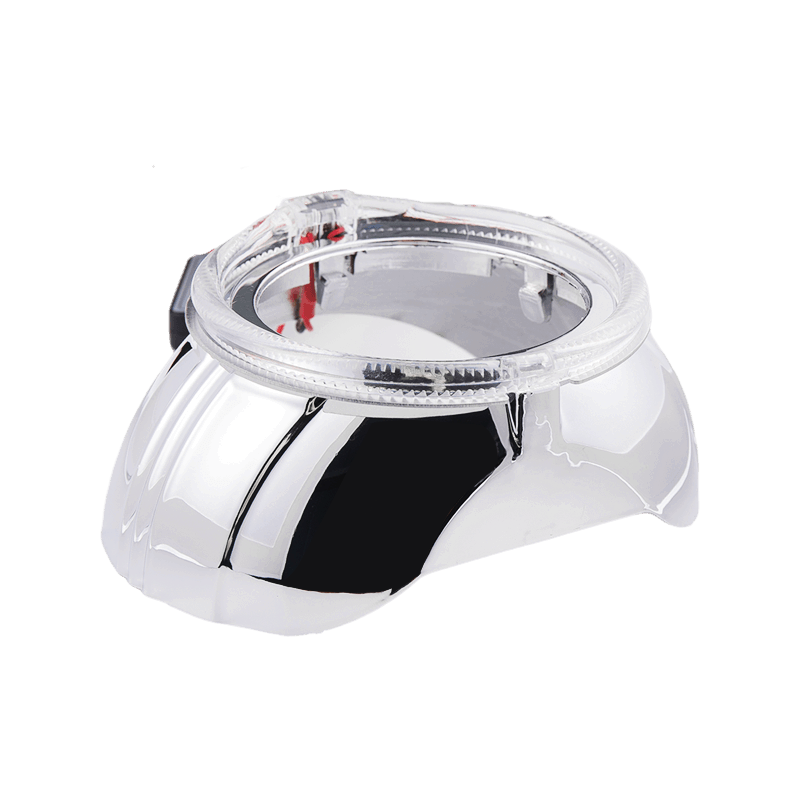
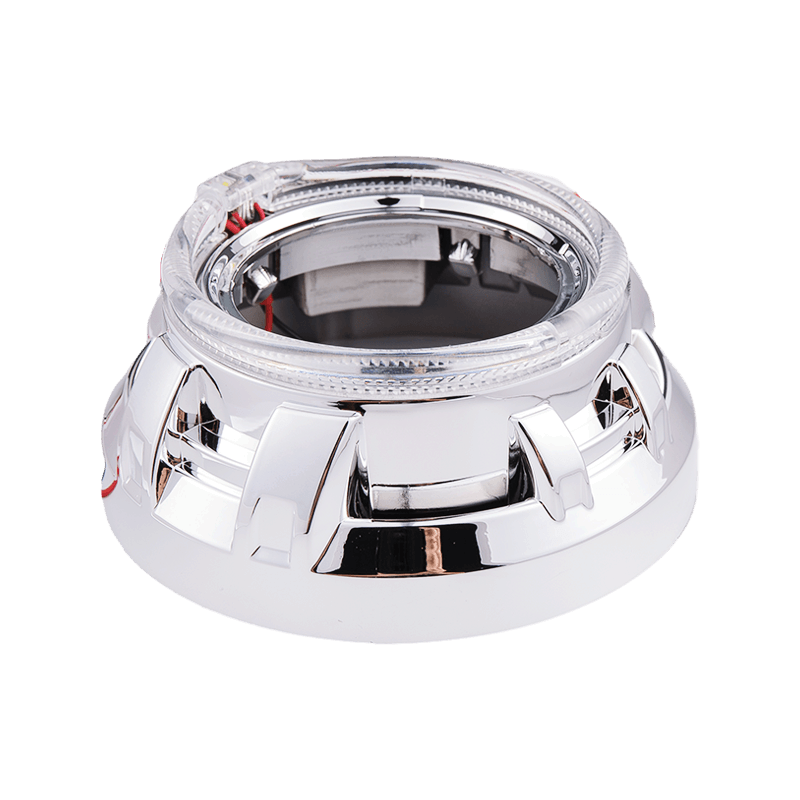
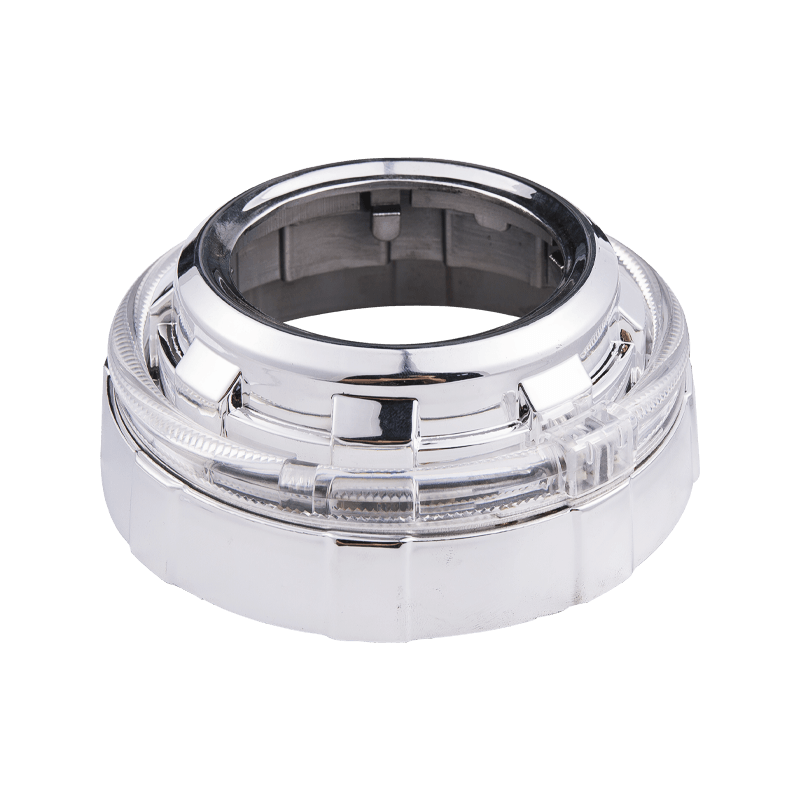
The Light Cup Bifocal Lens integrates a reflective light cup structure with a bifocal projection lens. This combination offers several measurable benefits:
| Feature | Benefit | Typical Performance Gain |
|---|---|---|
| Dual focal zone optics | Low/high beam from one lens | Beam efficiency +20–30% |
| Reflective light cup integration | Higher light collection rate | Luminous utilization >80% |
| Sharp cutoff line geometry | Glare reduction | Stray light reduced by ~40% |
| Compact single-body design | Simplified assembly | Weight reduction 15–25% |
| LED source compatibility | Future-proof platform | Lux output >1,500 lux @25m |
Typical Application Scenarios for Bifocal Lenses
Bifocal lenses are used across a wide range of vehicle types and lighting positions:
- Passenger vehicles: Front headlights requiring both low and high beam compliance
- Commercial trucks: High-mounted headlights where beam angle precision is critical
- Motorcycles: Compact single-lens assemblies that must meet full beam pattern regulations
- Off-road and agricultural vehicles: Demanding environments where wide-area and long-range visibility are both required
- Retrofit and upgrade kits: Replacing older halogen projector systems with modern LED bifocal units
How to Evaluate a Bifocal Lens Before Selection
When selecting a bifocal lens for an automotive application, consider the following criteria:
- Beam Pattern Compliance: Verify that the lens meets the applicable regional standard (e.g., ECE, SAE, or GB). Request photometric test data showing the cutoff line position and illuminance values.
- Focal Length Matching: The lens focal length must be matched to the LED emitter size and position. A mismatch results in poor beam definition and reduced efficiency.
- Material and Coating: Optical-grade PMMA or glass is preferred. Look for anti-reflection (AR) coatings to reduce surface reflection losses, which can account for 4–8% light loss per uncoated surface.
- Thermal Tolerance: Headlight environments can reach 80–120°C. Confirm the lens material's heat deflection temperature (HDT) exceeds the operating range.
- Integration with Light Cup: Confirm that the reflector cup geometry is co-designed with the bifocal lens for maximum system efficiency.
Frequently Asked Questions
Q1: What is the main difference between a bifocal lens and a standard projector lens?
A standard projector lens has a single focal zone for one beam mode. A bifocal lens incorporates two distinct optical zones in one body, enabling both low-beam and high-beam functions without switching hardware.
Q2: Can a Light Cup Bifocal Lens be used with existing LED modules?
Yes, provided the LED emitter size and position are compatible with the lens focal specifications. Always verify optical matching parameters before installation.
Q3: Does a bifocal lens require any special housing design?
The headlight housing must accommodate the lens diameter and allow precise positioning relative to the light source. Bifocal lenses are typically designed as drop-in replacements for existing projector housings or as part of integrated assemblies.
Q4: How does a bifocal lens reduce glare?
The low-beam optical zone is engineered with a sharp cutoff geometry that blocks light above a defined angle — typically 0° to 0.57° above horizontal — preventing illumination of oncoming drivers' eye level.
Q5: What material is best for a bifocal lens used in high-temperature environments?
Borosilicate glass offers superior thermal resistance for extreme environments. For standard automotive use, high-grade PMMA with a heat deflection temperature above 100°C is widely used and cost-effective.
Q6: Is a bifocal lens more expensive than a single-focus lens?
The unit cost is slightly higher due to more complex mold tooling. However, the elimination of a second lens element and associated hardware typically results in lower total system cost at the assembly level.