

 English
 Español
 عربى
عربى русский
Automotive LED lights work by passing an electrical current through a semiconductor material, which causes electrons to release energy in the form of light — a process called electroluminescence. Unlike traditional halogen bulbs that heat a filament, LEDs produce light directly from electron movement, making them far more efficient, longer-lasting, and more reliable for vehicle use.
The Core Technology Behind Automotive LEDs
At the heart of every automotive LED is a p-n junction semiconductor, typically made from materials such as aluminum gallium indium phosphide (for red/yellow light) or indium gallium nitride (for blue/white light). When voltage is applied:
- Electrons from the n-type layer and holes from the p-type layer move toward the junction.
- When they recombine at the junction, energy is released as photons (light).
- The color of light depends on the energy gap of the semiconductor material.
- White automotive LEDs are typically blue LEDs coated with a yellow phosphor layer to produce a broad-spectrum white output.
This process generates very little heat compared to visible light output — halogen bulbs convert roughly 90% of energy into heat, while LEDs convert the majority into usable light.
Key Components of an Automotive LED Light
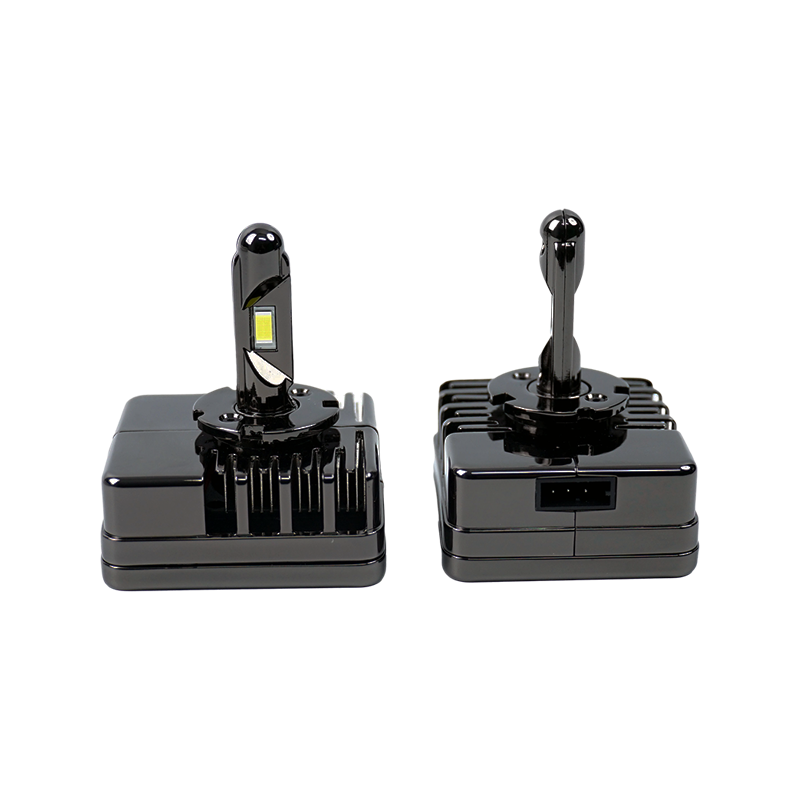
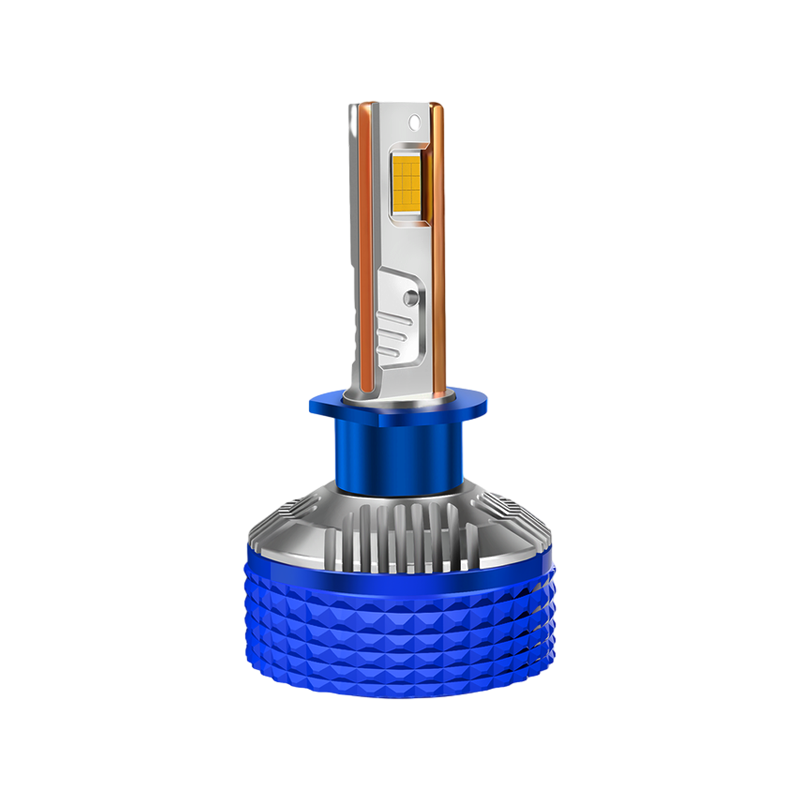
A complete automotive LED lighting unit consists of several integrated parts working together:
| Component | Function |
|---|---|
| LED Chip | The semiconductor that produces light |
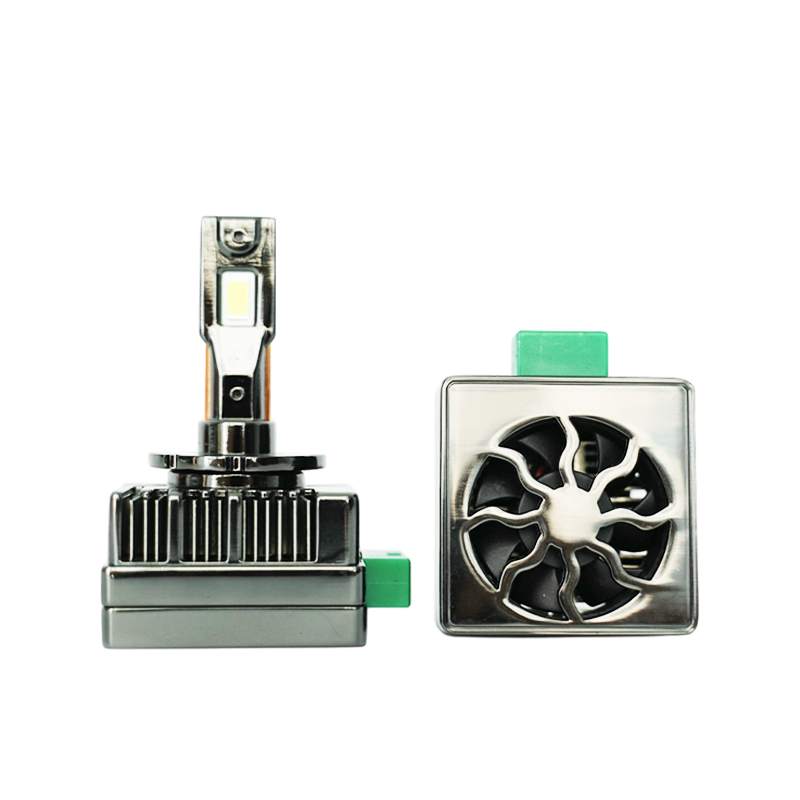
| Heat Sink | Dissipates residual heat to protect the chip |
| Driver Circuit | Regulates current to ensure stable, safe output |
| Lens / Reflector | Shapes and directs the light beam |
| Housing | Provides structural protection and weatherproofing |
The driver circuit is particularly important in automotive applications — vehicles have fluctuating voltage (typically 12V–14.4V when running), and the driver ensures the LED receives a consistent current to maintain brightness and longevity.
Why Automotive LED Lights Are More Efficient Than Halogen
The performance gap between LEDs and conventional halogen bulbs is substantial and well-documented:
- Energy efficiency: LEDs consume 50–75% less power than halogen bulbs for equivalent brightness.
- Lifespan: A quality automotive LED can last 30,000–50,000 hours, versus 500–1,000 hours for halogen.
- Response time: LEDs reach full brightness in under 100 nanoseconds — nearly instantaneous compared to halogen.
- Light quality: LEDs emit a color temperature of 5,000–6,500K (cool white), closer to daylight, which improves visibility.
- Vibration resistance: With no filament, LEDs are far more durable on rough terrain or heavy-duty applications.
These advantages make LEDs the preferred choice for modern vehicles, both in factory headlights and aftermarket accessories such as work lights.
How Car LED Work Lights Function in Practical Applications
A Car LED Work Light applies the same LED principles but is engineered specifically for demanding automotive and off-road conditions. These lights are designed to deliver high-intensity, directional illumination for areas such as engine bays, undercarriages, work sites, or off-road trails at night.
Beam Patterns and Their Uses
Work lights use different optical configurations depending on the task:
- Spot beam: Narrow, long-range beam ideal for forward lighting on trails or roads.
- Flood beam: Wide-angle illumination covering a broad area, suited for work sites and close-range tasks.
- Combo beam: Combines spot and flood optics in a single unit for versatile coverage.
IP Rating and Durability
Car LED work lights intended for outdoor or vehicle use typically carry an IP67 or IP68 rating, meaning they are fully dust-tight and can withstand temporary or continuous water immersion. This is critical for lights mounted underneath vehicles or used in wet environments.
Thermal Management: How LEDs Handle Heat
Although LEDs are cool compared to halogens, they still generate heat at the chip junction. Poor thermal management is the primary cause of LED failure and lumen degradation in automotive applications. Effective solutions include:
- Aluminum die-cast housings: Conduct heat away from the chip rapidly.
- Thermal interface materials: Fill microscopic gaps between chip and heat sink for better conductivity.
- Active cooling (fans): Used in high-power units to force airflow across the heat sink.
- Passive fins: Increase surface area for natural convection cooling without moving parts.
A well-designed automotive LED that maintains junction temperatures below 85°C can sustain over 90% of its original lumen output for its rated lifespan.
Voltage and Compatibility With Vehicle Electrical Systems
Modern vehicles operate on a 12V DC system (or 24V for heavy trucks). Automotive LEDs must tolerate:
- Voltage spikes during engine start (up to 16V in some cases)
- Load dump transients that can briefly exceed 40V
- Reverse polarity events during improper installation
Quality automotive LED work lights incorporate built-in protection circuits — including overvoltage protection, reverse polarity protection, and EMC filtering — to ensure safe, stable operation across all driving conditions.
Frequently Asked Questions
Q1: Do automotive LED lights require a special controller or canbus module?
Not always. Many modern LED work lights are plug-and-play for 12V/24V systems. However, replacing factory signal or interior bulbs on newer vehicles may require a CANbus resistor to prevent error codes, because the vehicle's system detects the lower current draw of LEDs as a "bulb out" fault.
Q2: How long does a car LED work light typically last?
Quality units are rated at 30,000 to 50,000 hours of use. Under typical intermittent use, this translates to decades of service life with no bulb replacement needed.
Q3: Are LED work lights safe to use while the engine is off?
Yes, but be mindful of battery drain. LED work lights are efficient, but extended use without the engine running will draw down the vehicle battery. Always monitor usage time when the alternator is not charging.
Q4: What does lumen output mean for a car LED work light?
Lumens measure total visible light output. For reference, a standard halogen fog light produces around 800–1,200 lumens, while a compact LED work light can produce 1,500–5,000+ lumens at significantly lower wattage.
Q5: Can automotive LED work lights be used in extreme cold or heat?
Yes. LEDs actually perform better in cold temperatures than halogens. For heat, the housing and thermal management design determine performance — look for lights rated for an operating range of at least -40°C to +85°C for reliable all-climate use.